Moving Beyond Fear to Courage

Sleepy Hollow State Park, MIchigan- By Mark J. Booth

When fear takes its grip upon our lives, it affects our view of circumstances, of others and of the future.  Fear causes us to doubt the love of God, the presence of God, the provision of God, and even the protection of God.  Fear keeps us from doing what God has called us to do.  How can we move beyond our fears and approach life with courage?

Courage is the willingness to move forward with our lives in spite of the obstacles and dangers that we face.  The nation of Israel, including King Saul, was paralyzed by fear on account of Goliath.  His size was overwhelming.  However, David had moved beyond his fear to courage.  David didn’t see the power of Goliath. He saw the power of His God. His courage has inspired us to face life’s situations with the understanding that God is greater than anything that is happening in our life.

How Can I Move Beyond Fear to Courage?

1. Remember the presence of God.  God is with us as we travel through this life. His presence brings courage because we know that we are not alone.  If we are passing through the shadow of death. we are not alone.  If we are facing some great trial, we are not alone.  If we are facing an unknown future, we are not alone.  “Fear thou not; for I am with thee:be not dismayed; for I am thy God: I will strengthen thee; yea, I will help thee; yea, I will uphold thee with the right hand of my righteousness.” (Isaiah 41:10)

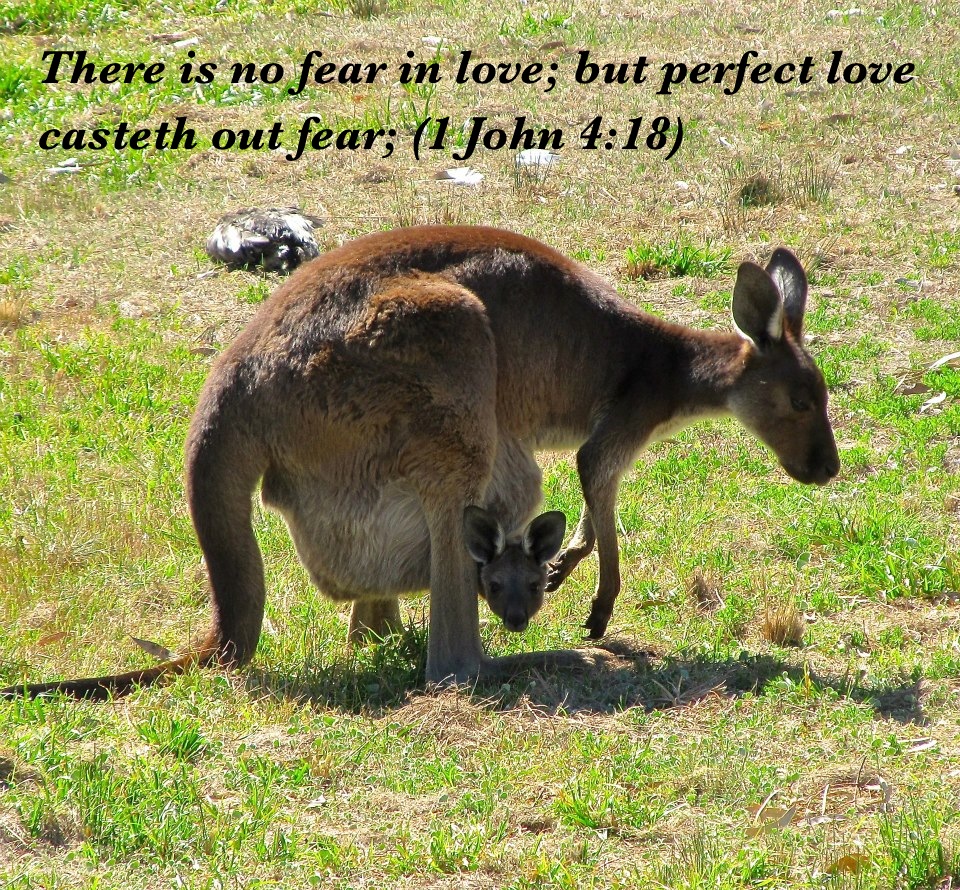
2. Enjoy the love of God.  God’s love was clearly demonstrated upon the cross of Christ.  The fear of death was removed when Jesus died upon the cross for our sins.  His death and resurrection conquered death.  If his love has removed our greatest fear, it can also take away all other fears.  A baby in the arms of its loving mother has no fear.  Likewise, we are in the arms of our loving God.  Why should we be ruled by fear? “There is no fear in love; but perfect love casteth out fear: because fear hath torment. He that feareth is not made perfect in love.” (1 John 4:18) 
3. Develop a fear of God.  The fear of God has been defined as: “Realizing that God is watching and weighing every one of my thoughts, words, actions and attitudes.”  The fear of God places God in His rightful place in our lives.  When our walk with God is right, we can live our life with courage instead of fear. “In the fear of the Lord is strong confidence:and his children shall have a place of refuge.” (Proverbs 14:26)

4. Walk by faith, not by sight.  When walk by faith in our loving, all-wise, and all-powerful God, we can face life with courage.  Fear cannot exist together with faith.  Fear flourishes when we see life from our perspective, instead of trusting our Great God.  When faith rules in our heart, we will have the courage to conquer any mountain that is before us.  “In whom we have boldness and access with confidence by the faith of him (Christ).” (Ephesians 3:12)

5. Study and memorize the Word of God.  Fear often is the result of ignorance.  When we study the Word of God, we see God working in the lives of people such as Moses, Joshua, Ruth, David and Daniel.  These people faced fearful situations; yet they faced them with courage because they knew their God. “But the people that do know their God shall be strong, and do exploits.” (Daniel 11:32)  When we study the Word, we get to know God better.  The more we know Him, the more we will be able to trust Him.  Our fear will turn into courage, not because of who we are, but because of who He is.

6. Become familiar with the “fear nots” in the Bible. God knows our heart.  He knows that we are prone to fear.  We are prone to walk by sight and not by faith.  He encourages us with many of His “fear nots” in the Bible.  Here are just a few.

  • Fear not in your life’s journey. “And the Lord appeared unto him the same night, and said, I am the God of Abraham thy father: fear not, for I am with thee,” Genesis 26:24
  • Fear not concerning your daily needs. “And Elijah said unto her, Fear not; go and do as thou hast said: but make me thereof a little cake first, and bring it unto me, and after make for thee and for thy son. For thus saith the Lord God of Israel, The barrel of meal shall not waste, neither shall the cruse of oil fail, until the day that the Lord sendeth rain upon the earth.” (1 Kings 17:13-14)
  • Fear not when in danger. “And he answered, Fear not: for they that be with us are more than they that be with them. And Elisha prayed, and said, Lord, I pray thee, open his eyes, that he may see. And the Lord opened the eyes of the young man; and he saw: and, behold, the mountain was full of horses and chariots of fire round about Elisha.”  (2 Kings 6:16)
  • Fear not in times of weakness. “Fear thou not; for I am with thee: be not dismayed; for I am thy God: I will strengthen thee;” (Isaiah 41:10)
  • Fear not in times of trials. “Fear not: for I have redeemed thee,I have called thee by thy name; thou art mine. When thou passest through the waters, I will be with thee;and through the rivers, they shall not overflow thee: when thou walkest through the fire, thou shalt not be burned;” (Isaiah 43:1-2)
  • Fear not in times of failure.  Here is what God said after the Israelites’ failure at Ai. “And the Lord said unto Joshua, Fear not, neither be thou dismayed:” (Joshua 8:1)  God did bring the victory after their previous failure.  
  • Fear not in times of sickness or nearing death. “Yea, though I walk through the valley of the shadow of death, I will fear no evil: for thou art with me; thy rod and thy staff they comfort me.” (Psalm 23:4)

“Dear Lord, thank you for assuring me that you are with me throughout this life and for all eternity.  Thank you that you give me the courage to move forward in my life in spite of the obstacles that are before me.  Please, give me the courage to live each day for you. ”

Author’s Note: This is the second article in the series called “Moving Beyond!”
Moving Beyond Doubt to Faith

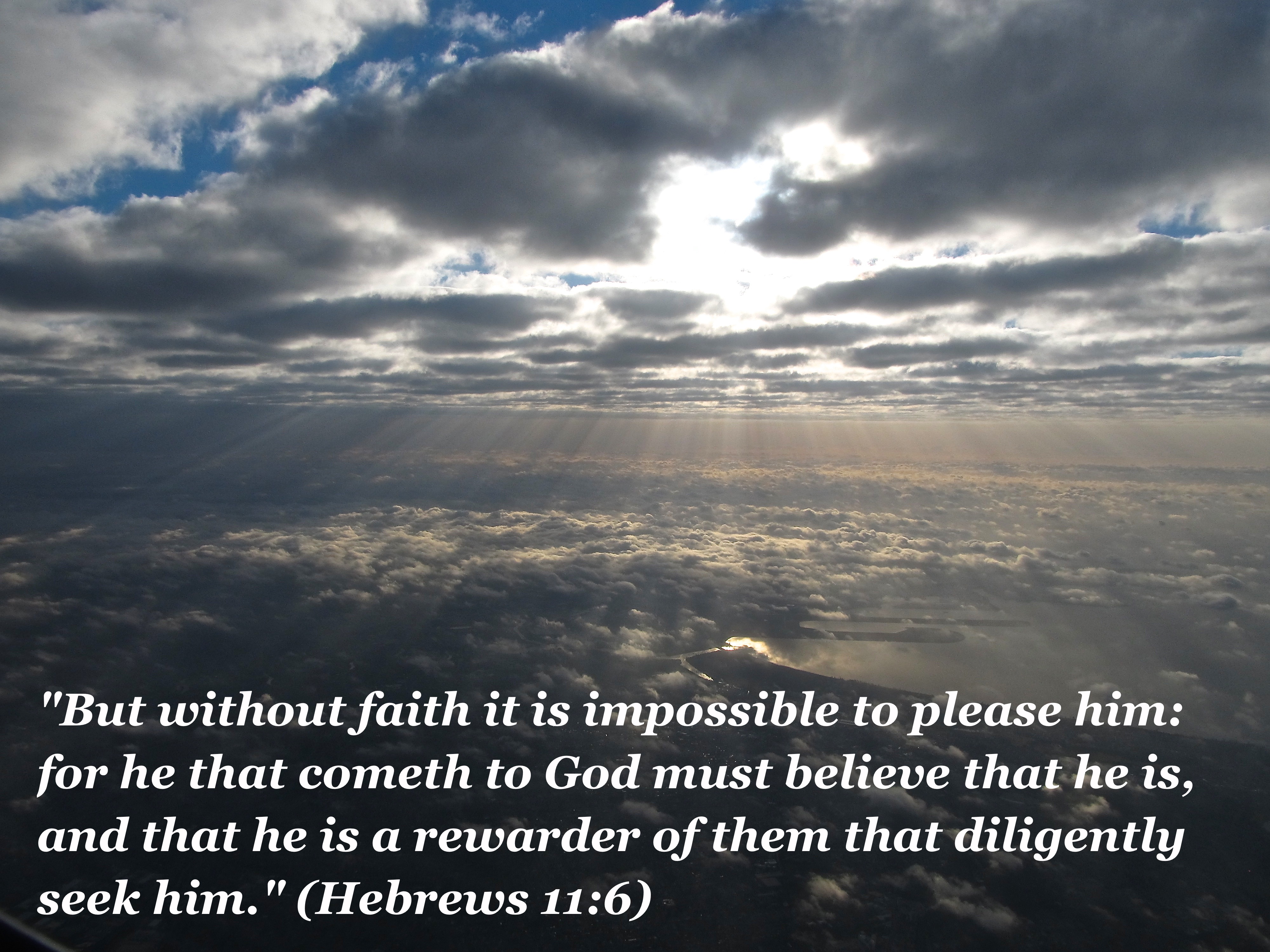
Morning sky over Sydney, Australia-Photo by: Mark J Booth

Faith in God can often be elusive in our lives.  We know that we should have faith in God; yet everything around us is crying out saying: “Can you really trust God?”.  “Why is God taking so long.?” “Where is God in all of this?”  How can we move beyond these doubts and live in faith towards God?

How do we doubt God in our daily lives?

  1.  We doubt the protection of God.  We feel vulnerable when events bring hurt into our lives.  Like the Israelites, we feel that God has left us on our own.
  2. We doubt the promises of God.  God’s Word is full of promises, but we don’t accept them for our own lives.  We feel undeserving.  We may be ignorant of his promises.  We think these promises don’t apply to our circumstances.  Thus, we lose out on the blessings that these promises provide.
  3. We doubt the presence of God. God says that “He will never leave us nor forsake us.”  We look for God, but we can’t seem to find Him.  We may think that he doesn’t care.
  4. We doubt the power of God.  Paul says: “I can do all things through Christ which sterngtheneth me.” (Philippians 4:13)  However, we fail to experience this power when we are expecting God “to come through for us.”
  5. We doubt the provision of God.  God says that He will take care of us; yet we fret and worry about our money and possessions.
  6. We doubt the plan of God.  God is not working in our lives in the way we would like.  We decide to go our own way. Joseph could have doubted God’s plan because the path was dark and difficult to which God had called him.

What causes us to doubt God?

  1. We doubt God because of our own human nature.  One of the conflicts we have in our Christian life is that we choose to walk by sight and not by faith.  We allow our circumstances to cloud our view of God.  Sin blinds us to the reality of God’s Word and His Promises.
  2. We doubt God because of the influence of others.  When those around us doubt God and His Word, they can infect us with this same thinking.  The ten spies influenced one another to doubt God.  Caleb and Joshua had enough faith to withstand the pressure from the other spies.
  3. We doubt God because of the many obstacles that happen in our lives.  Job had some difficulties with his faith because his whole world had collapsed.  Likewise, we tend to doubt God in the tough times.
  4. We doubt God because of his “divine delays”.  God doesn’t work His plans in our time.  Because of this, we become impatient and we begin to doubt God.  We say: “Why hasn’t God done something!”

How do we move beyond doubt into faith? 

We know that we should walk by faith and not by sight.  We know that living by faith pleases God, but we still struggle with our doubts.  What can we do to cultivate our faith.

  1. We cultivate our faith through reading and studying the Word of God.  Romans 10:17 says:  “So then faith cometh by hearing, and hearing by the word of God.”  The reading of the Word enables us to learn more about God, His promises, and His working in our lives.  The more we know God; the more we will trust Him.  The heroes of the faith in Hebrews knew their God.  This resulted in their unwavering faith.  How well do we know our God?
  2. We cultivate our faith by learning to cry out to God.  Once Jesus met a man whose son was demon possessed.  This father understood his need to cry out to God:  “And straightway the father of the child cried out, and said with tears, Lord, I believe; help thou mine unbelief.” (Mark 9:24)  Crying out to God is saying: “I can’t do it.”  “I can’t continue without you.” God will respond when we cry out to Him.
  3. We cultivate faith by choosing faith when doubt is crying out to us.  When we choose faith, we are siding with God and His Word.  We put aside our viewpoints and opinions and accept the ways of God.  2 Corinthians 5:7 says: “(For we walk by faith, not by sight:)”  Paul made a choice to choose faith in spite of all the obstacles.  Our problems should be stepping stones to our faith and not stumbling blocks to our faith.

God is totally worthy of our faith.  He doesn’t need to prove Himself to us.  When we choose to move beyond doubt unto faith, we will live a life that is pleasing to God.  “But without faith it is impossible to please him: for he that cometh to God must believe that he is, and that he is a rewarder of them that diligently seek him.” (Hebrews 11:6)  Faith in God brings pleasure to God because it shows that we know Him, we love Him,  and we need Him.

Faith is a choice in the midst of obstacles.  Let’s move beyond our doubts and place our faith in Him.  Doubt will make cowards of us all.  Faith will enable us to face life with courage.  Doubt will keep us from moving forward in our Christian life.  Faith will keep us walking close to God.

“Father, I doubt you quite often.  I choose to walk by sight instead of by faith.  Like the man who cried out to you to help his unbelief, I cry out to you: “Increase my faith.”

Delighting in God in Stressful Times


God’s is waiting for us to come to Him. Photo by: Mark J Booth
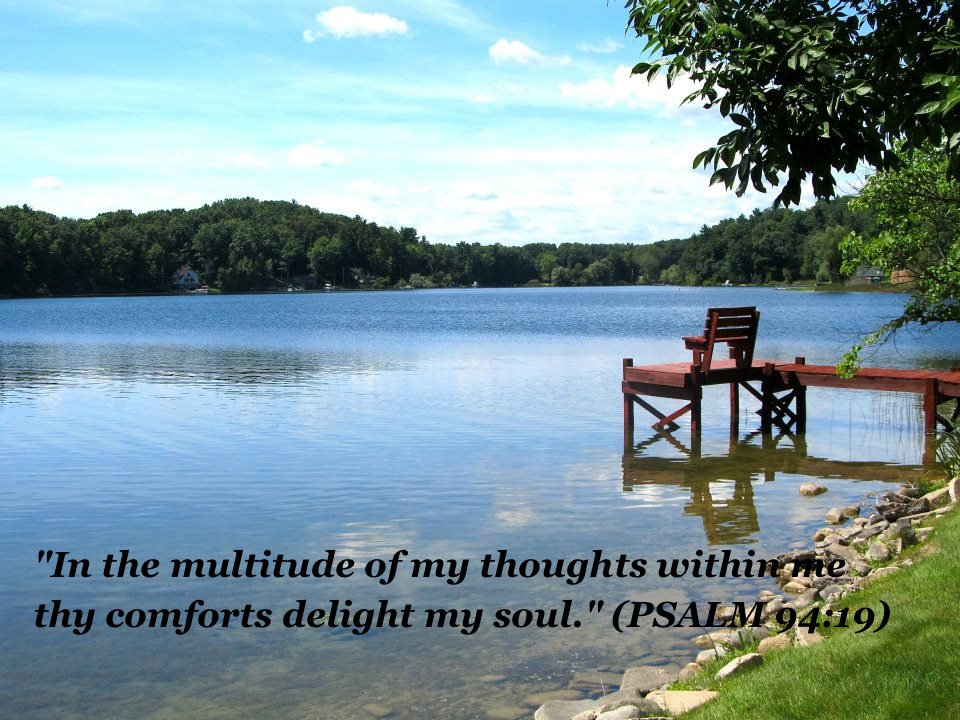
The cares of this life often seem to build up until we feel overwhelmed. We become discouraged and feel stressed about life. Is there a place of comfort in the midst of the cares of this world? “In the multitude of my thoughts within me (cares of my heart) thy comforts delight my soul.” (Psalm 94:19). The Psalmist is saying: “No matter how stressful life is, God is here not only to bring comfort, but delight to my soul.”
There are many things that can be overwhelming and bring stress upon us:
  • the stress of our own failures, sins, and worries.
  • the stress from our concern for our loved ones.
  • the stress from people who oppose us.
  • the stress of work
  • the stress of growing older
  • the stress of keeping up with others
  • the stress of trials in our lives
  • the stress of loneliness
  • the stress of not knowing the future.
  • the stress of making decisions
Stressful situations fill our lives.  However, In the midst of the stresses of life, we can always flee to the “God of all Comfort”.  We can flee to Him:
  • by prayer and praise unto Him
  • by opening up the Word of God and listening to Him
  • by submitting our lives completely to Him
  • by confessing any known sin unto Him
He is always available to bring comfort, peace and hope to the soul who is coping with stress in their lives. Will we flee to Him in midst of the cares and stresses of life? Yes!
GOD WILL CHANGE OUR STRESS INTO DELIGHT IN HIM!


Where Can I Go?(Psalm 18:2)


Photo of the Alps by Mark J. Booth

I am drowning in the midst of a storm.  I feel alone.  I don’t know where to go?  What does the Word of God say: “The Lord is MY ROCK, and MY FORTRESS, and MY DELIVERER; MY GOD, MY STRENGTH, in whom I will trust; MY BUCKLER (shield), and the HORN OF MY SALVATION, and MY HIGH TOWER.” (Psalm 18:2)

Jesus reminded the disciples that in this life they would experience tribulation.  We have all experienced tribulation.  We try to resolve the situation.  We try to cope.  We try to ignore the storm; yet we feel like we are sinking deeper and deeper into the raging waters.  David experienced many storms in his life.  Where did he go for deliverance and relief?  He went to “his God”.  Likewise, we can go to our God regardless of how strong the storm.

1. We can go to Our God because He is our Rock.  When a person is sinking into the water, they are looking for something solid on which to find their footing.  We often stumble and fall because we don’t stand firmly upon our solid rock, the Lord God.  Do you feel like you are wavering in every direction, then go to the Rock.  

2. We can go to Our God because He is Our Fortress.  A fortress is a place of refuge from the enemies we may have in this life.  Many people talk about being hurt by others.  Yes, others may try to hurt us, but we have a fortress to whom we can run.  We don’t have to be hurt by others, we can go to the Lord God, Our Fortress.

3. We can go to Our God because He is Our Deliverer.  The disciples were fearful in the midst of a terrible storm.   They were without hope until they cried out to the Lord.  The Lord stopped the storm.  No matter how awful the storm, the Lord is ready and able to deliver us.  No matter how strong the temptation the Lord will deliver us.

4. We can go to Our God because He is Our God.  David knows that he has a personal relationship with the Lord God.  He can go to His God at any time.  When we know God, we can trust Him.  We know that He loves us with an everlasting love.  We know that He will never leave us nor forsake us.

5. We can go to Our God because He is Our Strength.  David couldn’t handle his enemies in his own strength, but he knew the All-Powerful God.  We can do nothing apart from God.  As Paul stated: “I can do all things through Christ which strengtheneth me.” (Philippians 4:13).  We may get tired and want to quit, but God’s strength enables us to carry on.

6. We Can Go to Our God because He is our Shield.  Satan throws his fiery darts of doubt, denial, guilt, temptation, discouragement, and rebellion against God.  In ourselves, we have no defense against these darts; however God is Our Shield.  He comes between us and the fiery darts of Satan.  There is no safer place than behind God, Our Shield.

7. We can Go to Our God because He is Our Savior.  Our salvation solves the greatest problem in life, which is how can a sinful person approach a Holy God.  Jesus took our place upon the cross and paid for our sin.  Through Him, we have eternal life.  If God has taken care of our greatest problem in this life, why can’t we trust Him with the storms that pass through our lives?

8. We can Go to Our God because He is Our High Tower.  We often see a bird flee into the sky as we approach it.  The bird knows that there is safety in the heights.  Likewise, our Lord places us in the heights to keep us away from the traps and snares of this life.  The storms have little effect upon us when we are safe and secure in the Lord.

As a result of all that God is, David says: “In whom I will trust.”  David knows the Greatness of God.  He trusts God because he knows Him.  Do we know our Great God.  Yes, the storm may be strong, but we do have One to whom we can go.  Will we?


Lean Hard! What to Do When the Burdens are Heavy.

Outside of Mexico City from a plane: Photo by Mark Booth

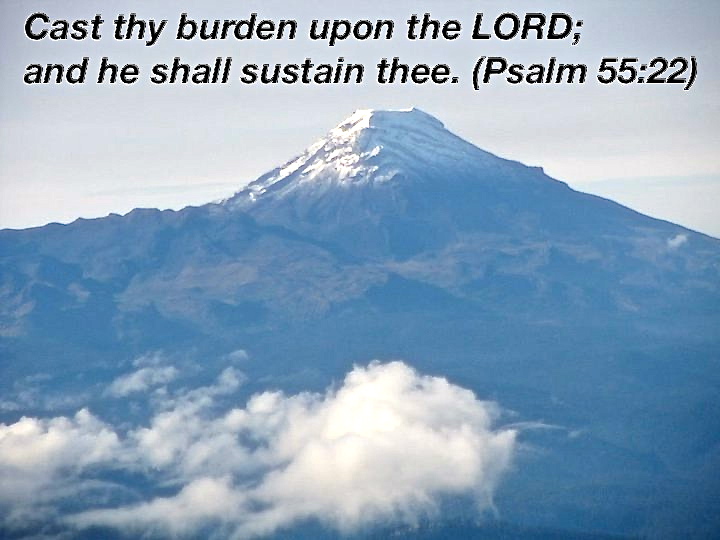
Is your burden too heavy to carry?  Are you facing difficult times?  Are you without hope? Are you without direction?  Does anybody care?  Yes, there is One who does care. His name is Jesus Christ.  What does God say: “Casting all your care upon Him; for He careth for you.” (1 Peter 5:7) God is ready and waiting for us to place our burdens upon Him.

Here is a devotion written by Octavius Winslow that expresses God’s desire for us to Lean Hard upon Him.  Octavius Winslow was a pastor during the 19th century who was known for compassionate and doctrinally sound preaching.  He is one of my favorite authors.  I would encourage any of my readers to look up his books and download them for free.  Enjoy the following devotion and don’t forget to Lean Hard! 

Lean hard!

(from Winslow’s, “The Burden Cast upon God”)

“Cast thy burden upon the Lord; and
He shall sustain thee.” (Psalm 55:22)

It is by an act of simple, prayerful faith we
transfer our cares and anxieties, our sorrows
and needs, to the Lord.

Jesus invites you come and lean upon
Him, and to lean with all your might upon
that arm that balances the universe, and
upon that bosom that bled for you upon
the soldier’s spear!

But you doubtingly ask, “Is the Lord able to do this
thing for me?” And thus, while you are debating a
matter about which there is not the shadow of a
shade of doubt, the burden is crushing your gentle
spirit to the dust.

And all the while Jesus stands at your side and
lovingly says, “Cast your burden upon Me and
I will sustain you. I am God Almighty. I bore
the load of your sin and condemnation up the
steep of Calvary, and the same power of
omnipotence, and the same strength of love that
bore it all for you then, is prepared to bear your
need and sorrow now. Roll it all upon Me!”

“Child of My Love! Lean hard! Let Me feel the
pressure of your care. I know your burden, child!
I shaped it- I poised it in My own hand and made
no proportion of its weight to your unaided strength.
For even as I laid it on, I said I shall be near, and
while she leans on Me, this burden shall be Mine,
not hers. So shall I keep My child within the circling
arms of My own love. Here lay it down! Do not
fear to impose it on a shoulder which upholds the
government of worlds! Yet closer come! You are
not near enough! I would embrace your burden,
so I might feel My child reposing on My breast.
You love Me! I know it. Doubt not, then. But,
loving me, lean hard!

Will we LEAN HARD upon Him??

P.S  Here are a couple of websites with more writings by Octavius Winslow.  Enjoy!
http://www.gracegems.org/BOOKS/Octavius%20Winslow%20books.htm
http://octaviuswinslow.org


The Pleasure of Morning Prayer (A Great Way to Start the Day) (Psalm 5)

Sunrise on the Canadian Prairie: by Mark J Booth

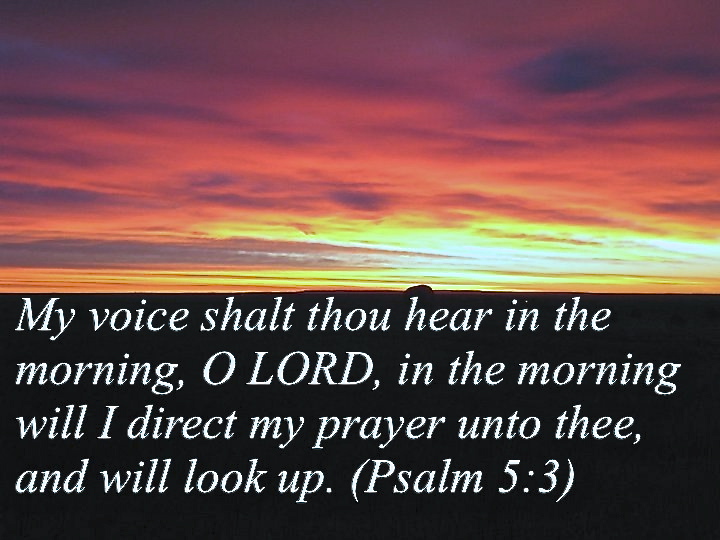
How we start our day often dictates how we view the rest of the day.  There are many days when I feel confused or even anxious.  I feel like I am running on empty.  What is the problem?  Perhaps, I have forgotten the pleasure of starting my day with the most important person in my life, my Heavenly Father.  The Psalmist, David, understood the importance of starting the day with a time of prayer with the Lord.  “My voice shalt thou hear in the morning, O LORD; in the morning will I direct my prayer unto thee, and will look up.” (Psalm 5:3)

1. Morning prayer is a pleasure because it reminds us of our need of God.  David lived his life with one trial after another.  These trials were a constant reminder to him that he needed his Heavenly Father daily.  When we start our day with prayer, we are saying to God: ” I need you throughout this day.  I need your wisdom.  I need your strength.  I need your protection.”  Morning prayer enables us to come to God with all humility

2. Morning prayer is a pleasure because it reminds us of the greatness of God.  David recognizes the greatness of God when he writes: “Hearken unto the voice of my cry, my King, and my God.” (Psalm 5:2)  David constantly writes about the attributes of God.  Morning prayer enables us to start the day focusing upon God.  We remember that our God is faithful, merciful, loving, holy, just, all-powerful, omnipresent, all-knowing, and wise.  We also remember that He is our Father, who wants to take care of us throughout the coming day.

3. Morning prayer is a pleasure because it enables us to sort out our priorities.  David says: “I direct my prayer unto thee, and will look up.” (Psalm 5:3)  David was a man after God’s own heart because he had the proper priorities in his life.  David started his day by seeking direction from God.  His relationship with the Lord was the top priority of His life.  When we start the day with the Lord, we are saying to him:  “My relationship with you is the most important priority in my life.”  Wrong priorities create confusion and very anxious days.  When our relationship with the Lord is right, everything else will fall into its proper place.

4. Morning prayer is a pleasure because we can share our burdens with the Lord.     David writes: “Lead me, O LORD, in thy righteousness because of mine enemies: make thy way straight before my face.” (Psalm 5:8)  David faced many enemies.  These enemies were a great burden upon David.  We begin our day with many burdens.  We have burdens in our family.  We have burdens at work.  We have financial burdens.  We have health burdens.  We have many other burdens.  Our morning prayer time is a great opportunity to cast these burdens upon the strong arms of our Heavenly Father.  “Cast thy burden upon the LORD and he shall sustain thee: he shall never suffer the righteous to be moved.”  (Psalm 55:22).

Every day begins with a great opportunity to talk to our loving Heavenly Father.  When you love someone deeply, it is a pleasure to start the day with them.  Prayer is not a chore, but a pleasure.  God is always available to listen to us, but are we ready to speak to Him?

“Dear Heavenly Father, there are many mornings that I forget to take the time to talk with you.  I have forgotten the pleasure I derive from spending this time with you.  You are patiently waiting for me every morning.  You are always ready to listen.  Help me to come to you each morning with an open heart, remembering that you also take pleasure in hearing from me. Amen”

How Great Thou Art (Have We Forgotten God’s Greatness?)

Have we diminished the Greatness of God in our lives? Are we making God into the image of man? Do we view God as we desire Him to be; or do we view Him as He reveals himself in His Word? The Psalmist understood the greatness of God “FOR THOU ART GREAT, and doest wondrous things: thou art God alone.” (Psalm 86:10) ”

God is Great in His Attributes. “For thou art Great.”

Do we ever meditate upon who God is?  Do we think about each of His attributes?  I would encourage us to take time each day to meditate upon one of God’s attributes.  For example, one day, meditate upon the omnipresence of God (God is present everywhere).  Read verses that show His omnipresence.  Think about His presence as you work.  Remember His presence as you spend time with family. No matter what happens during the day, remember “God is here”.   The next day, do the same thing with another attribute of God.  Often God loses His Greatness in our eyes because we don’t really know Him.

God is Great in His Works. “and doest wondrous things” 

The word wondrous has the idea of producing “awe”.  Have we lost the wonder of God’s work of creation, His miracles in the Bible, and His working in our lives?  God loses His Greatness in our eyes when we forget that He still is working in our lives and the lives of the people around us.  Paul wrote about the believers in Philippi. “He which hath begun a good work in you will perform it until the day of Jesus Christ.”  Take the time to meditate upon God’s work in the past and the present.

God is Great in His Uniqueness. “Thou art God alone.”

Have we placed anything or anyone above God?  Anything can become an idol in our life if it comes before God.  God is truly above all.  He alone is God.  He alone merits our worship and our obedience.  God says in Isaiah 44:8: “Fear ye not, neither be afraid:have not I told thee from that time, and have declared it? ye are even my witnesses. Is there a God beside me? yea, there is no God; I know not any.”  Sin, fear and worry enter into our lives when we fail to see the uniqueness of God.  He alone is worthy of our worshipful.

A Prayer to Our Great God

Lord, help me to bow in submission before you. Help me to know you in all of your glorious attributes. Help me to see your wondrous works in creation and all that you do around me. Help me not to place anyone or anything before you. May I see you as you are and not as   I want you to be. Amen”

How Can I Go from Despair to Delight? (Psalm 13)

Photo by: Karla Da Silva (Used by Permission)

Despair creates a feeling of hopelessness. This affects our  life and the lives of others.  God seems distant.  The joy of our walk with God has disappeared.  Guilt permeates our life.  We are confused.   We don’t know what to do.

David, the Psalmist, was filled with despair.  He had fought the enemies of God’s people. He was also fleeing from King Saul.  God seemed very distant to David.  He was weary.  What was David to do?

Psalm 13 shows us how to move from despair to delight.  David starts out the Psalm in great despair.  He ends this Psalm with great delight in God.   What changed in David’s life.  What must change in our lives to go from despair to delight in God?

BE OPEN WITH GOD: THE FIRST STEP OF MOVING FROM DESPAIR TO DELIGHT
David shares his feelings with God in total honesty.  God wants us to be open with Him.  We think we can hide our feelings from God, but He knows all about us.  When we are open with God, it enables God to begin his work in our lives. Here are some ways that we can pour our heart out before God.

1. I am impatient with God “How long wilt thou forget me, O LORD? for ever?”  (Psalm 13:1)  We wonder when is this all going to end?   We silently say to ourselves: “Why isn’t God answering my prayer?”  We soon develop a spirit of complaining.   We hang on to our faith, but we are becoming weary of waiting.

2. I feel deserted by God. “How long wilt thou hide thy face from me?”(Psalm 13:1b)  God’s face doesn’t shine upon us as it once did.  It seems  like a dark cloud has come between God and us.  This dark cloud can be caused by our sins, our circumstances, or our  doubts.

3. I am confused. “How long shall I take counsel in my soul, having sorrow in my heart daily?” (Psalm 13:2a) We don’t know what to do?  There are no answers in ourselves. We don’t know where to go for help?  God’s  Word doesn’t seem to help in giving us direction in our lives.

4. I am defeated. “How long shall mine enemy be exalted over me?” (Psalm 13:2 )  We quit living our lives with joy.  We are going through the motions.    We feel as though we have been kicked to the ground. We can’t get up.  We just want to quit.

BE FOCUSED UPON GOD: THE SECOND STEP OF MOVING FROM DESPAIR TO DELIGHT.
Despair has overtaken David’s life; yet he remembers that God is alive.  He hears our cry.  God has the only answer to his despair.  After pouring out his heart to God,  he makes his plea unto God.  David remembers certain truths about God in his prayer that enable him to move from despair to delight.

1.God remembers me. Consider and hear me, O LORD my God.” (Psalm 13:3) When we pray unto God, we face the reality that God hasn’t forgotten about us.  We are His children.  He will never leave us nor forsake us.  Even the worst of circumstances can’t separate us from the love of God.

2. God hears me.  Prayer not only acknowledges that God remembers us, but we also know that He hears us.  God is always available to hear our cries unto Him.  He hears even the most silent cry from our heart.

3. God enlightens me.  “Lighten mine eyes.”  (Psalm 13:3b)  We despair because we stop seeing life from God’s perspective. We start to view life from our perspective.  We don’t see the big picture.  We allow our circumstances to affect our view of God,  instead of allowing God to affect our view of circumstances.   When God is in the picture, we view everything from a different perspective. (See Psalm 13:4)

BE FULL OF PRAISE UNTO GOD: THE THIRD STEP OF MOVING FROM DESPAIR TO DELIGHT.
David’s circumstances haven’t changed, but he has changed.  He has moved from  despair to delighting in God.   We long for God to change our circumstances, but God’s goal is to change us.   David expresses his delight in three ways.

1. I trust in God’s loving-kindness.  “But I have trusted in thy mercy;” (13:5a)  David’s faith is renewed in God’s love towards him.   We often speak of the love of God, but forget to live in accordance to His love.  When we climb out of the depths of despair, we see the sunshine of His love again.  We delight in all that He is.  Our despair dissipates in the warmth of His love.

2. I rejoice in my salvation.  “My heart shall rejoice in thy salvation.” (13:5b)  When we move from despair to delight, our hearts are open to the joy of the Lord.  We realize that our salvation not only gives us forgiveness and eternal life, but we also are a child of God.   Our Father is always ready to carry our burdens and hold us in His arms.

3. I give thanks unto the Lord.  “I will sing unto the LORD, because he hath dealt bountifully with me.” (13:6) David’s song is one of thanksgiving unto the Lord.  When we delight in the Lord, we recognize the many blessings that we receive.  We agree with the song writer who says: “Count your many blessings, name them one by one, And it will surprise you what the Lord hath done.”

David’s despair turned to delight when he turned his eyes upon the Lord.  Yes, the Lord seemed distant and uncaring to David; however, David demonstrated faith in reaching out to God even when God seemed beyond his reach.  Our despair can also become delight when we reach out to our Heavenly Father who cares for us.


A Sinking Saint in the Midst of a Storm (Peter’s Brief Walk on the Water)

Do you ever have the feeling that you are sinking deeper and deeper into the sea of sin, doubt, despair and discouragement?  Do you feel that you are in the midst of a storm and there is no end in sight?  The Apostle Peter understood the storms of life.  He also experienced sinking deeper and deeper into the sea.  Let’s join Peter and see how he handled his sinking deeper and deeper into the sea.

The disciples are in a boat in the midst of a storm.  Jesus comes to them, walking upon the water.  He tells them: “Be of good cheer, it is I; be not afraid. (Matthew 14:27)  Jesus always desires to calm our fears even in the midst of the greatest storm in our lives.

Peter asks the Lord if he also could walk on the water.  Jesus answers with one word: “Come“.  Jesus wants us to join him in the adventure of faith.  Peter enters into the water, and he begins to walk on the water; however, the scriptures say: But when he saw the wind boisterous; he was afraid and beginning to sink, he cried , he cried, saying, Lord, save me.” (Matthew 14:30

 What are some causes of Christians sinking spiritually in the midst of the storm?

1. Sin causes us to sink spiritually.  Peter could have thought; “Look at me, I am walking on the water.  What is wrong with those others?”  Peter’s pride could have caused him to sink.  When sin enters into our lives, we are no longer secure in our walk with Christ.  We let go of His guiding hand; so that we may go in our own direction.  There is nothing but danger when we walk separate from Jesus.

2. A lack of faith causes us to sink spiritually.  After Jesus delivers Peter from the sea, He says: “O thou of little faith, wherefore didst thou doubt? (Matthew 14:31)  Peter sees the waves and the winds and decides that they have greater power than Christ.  Often, we allow our doubts to destroy our faith.  As a result, we soon sink into discouragement and despair.

3. Difficult circumstances cause us to sink spiritually.  Peter has begun his great adventure in faith, but he sees the wind and the waves.  They are terrifying, and he feels as though he has no hope.  Difficult circumstances make us forget that GOD IS IN CONTROL.  He is the Master Potter and we are the clay.

4. Wrong priorities cause us to sink spiritually.  Peter begins well.  He leaves the boat and heads for the Lord.  However, he becomes preoccupied with the wind and the waves.  We have all experienced times in our lives, when we put our relationship with Lord on the back burner of life.  We know that He is with us, but we become preoccupied with other things in this life.  Wrong priorities lead us on a dangerous pathway away from our Lord.

The Cry of the Sinking Believer

Peter sees that he is in a very desperate situation.  His life is slipping away.  He could try to save himself, but this would result in disaster.  He responds with a cry out to His Lord Jesus Christ.  “When he saw the wind boisterous, he was afraid; and beginning to sink, he cried, saying, Lord, save me.” (Matthew 14:31)

We can describe Peter’s cry in three ways:
1. It was a desperate cry.  Peter knows that death is near.  He has only one hope. Likewise God is waiting for our cry of desperation to Him.  The Psalmist wrote:  “This poor man CRIED and the Lord heard him and saved him out of all his troubles.”  (Psalm 34:6)
2. It was a cry of faith. Peter calls out to the Lord in faith.  He knows that the Lord alone can save him from sinking to the depths of the sea.  Faith is believing that the Lord hears our cries and that he will respond.  “I sought the Lord, and he heard me.” (Psalm 34:4)
3. It was a cry based on his knowledge of Christ.  Peter knows that the Lord can save him.  He knows that the Lord is all-powerful, all-knowing and all-loving.  As we know the Lord in deeper way, we can cry out to him with greater confidence and freedom.

The Deliverance by the Loving Lord

Jesus hears Peter’s desperate cry and he immediately responds: “And immediately Jesus stretched form his hand, and caught him, and said unto him, O thou of little faith, wherefore didst thou doubt?  And when they were come into the ship, the wind ceased.” (Matthew 14:31-32)

Yes, there will be times when we seem to be sinking deeper and deeper.  All hope seems lost, but Our Lord is waiting for us to cry out to Him.  His hand is always ready to pull us back out of the tempest.

“Dear Lord, there are many times that I seem to sink deeper and deeper into sin, despair, or discouragement. My circumstances seem too difficult to bear.  Help me, to learn to cry out to you in the times when I am sinking.  Thank you for always being ready and willing to pull me up from whatever is causing me to sink. Amen.”

Personal Thoughts from the Chick-fil-A Discussion

Chick-fil-A and the issue of marriage has caused me to reflect upon my own life.  It has also brought about several questions concerning my  life and my view of God.  The following questions have helped me to make this whole controversy a learning and growing experience.

1. What is my view of God?  Do I see God as He presents Himself in His Word; or do I see God as I want Him to be?  Do I believe in all of God’s attributes or only the ones that are appealing to me?  Do I understand that God doesn’t change with society?  God says in His Word: “For I am the Lord, I change not.” (Malachi 3:6)   How I view God will often dictate my decisions, actions, and viewpoints..

2. What is the condition of my heart before God?  Is my heart right with God?  Do I seek to please God in everything I do?  Do I pray with the Psalmist: “Search me, O God, and know my heart; try me, and know my thoughts.”? (Psalm 139:23)  It is easy to take up a cause, but am I willing to take up the cross of Christ? Am I willing to sacrifice my all for Him?

3. What is the condition of my marriage?  I can’t control if people accept or reject the Biblical teaching of marriage, but I can do something about my marriage.  Do I love my wife as Christ loves the church?  Am I the spiritual leader that God calls me to be?  Does our marriage bring honor to the Lord?

4. Am I willing to believe and obey the Word of God in every area of my life?   I can confuse human opinions with God’s truth.  There is absolute truth.  Jesus said: “I am the way, the truth and the life.”  The ideas of society may change; however, the Word of God doesn’t change.

5. What am I doing to reach others with the Gospel of Christ?  Paul clearly didn’t seek to reform the Roman culture.  He desired to see each soul  turn to Jesus Christ as their Lord and Savior.   Paul stated: “So, as much as in me is, I am ready to preach the gospel to you that are at Rome also. ” (Romans 1:15)  Do I get caught up in social issues and forget the main issue?

6. Do I truly live as though I am a citizen of heaven?  Do I want to fit into the society around me?  Do I feel rejected and upset if I am not accepted by society?  The Apostle Peter said: “Dearly beloved, I beseech you as strangers and pilgrims, abstain from fleshly lusts, which war against the soul.” (1 Peter 2:11)
A believer in Christ is merely a pilgrim in this world.  My goal is not to please the world, but to please the Lord Jesus Christ.

“Dear Lord, I see that our society often disregards your Word; however, I have also disregarded your Word.  Please forgive me for the sin in my life.  Please forgive me for comparing my life to other people. I need to compare my life to your absolute standard of holiness.  Help me to keep my eyes focused upon you in spite of what is happening around me.  Thank you for being merciful towards me.     Your love for me is beyond my comprehension. Thank you for working in my life, even in times when it is painful. Amen.”