Breaking the Chokehold of Worry and Anxiety

“I AM BEING PULLED IN SO MANY DIRECTIONS!”

Have you ever felt pulled in several directions at once? You know you should have faith in God, and yet worry and anxiety have a chokehold on your whole life. The future seems dim. Your life is at a standstill. Sleep escapes you. God seems very distant. Despair is ruling your life. What can you do?

The word “worry” comes from the West Germanic word “wrygen,” which means “to strangle” or “to choke”.  Worry not only chokes our spiritual life, but also our emotional, social, and physical life. God knows the power that worry and anxiety have upon us. 

He tells us in Philippians 4:6-7: “Do not be anxious about anything, but in everything by prayer and supplication with thanksgiving let your requests be made known to God. And the peace of God, which surpasses all understanding, will guard your hearts and your minds in Christ Jesus.

How do we break this chokehold that worry and anxiety have upon us?  God gives us several ways to break this chokehold.

1. Understand the consequences that worry and anxiety have on our lives. The words “Do not be anxious about anything” have the idea of “stop being pulled in different directions”. Worry is sin because it keeps us from giving glory to God. It also keeps us from serving God and others to our full capacity. Worry causes us to doubt the goodness of God. Worry creates confusion in our lives. For these reasons and many others, God commands us to stop worrying.

2. Focus upon God and not upon our circumstances.  The above passage says, “Let your request be made known unto God.”  God is the source of peace. When our eyes turn from our trials and focus upon God, we will see the greatness of God’s power, wisdom, love, and sovereignty.  We know that we can trust Him regardless of what comes our way.  God is greater than any circumstance in our lives.

3. Talk to God about the source of our Worry and anxiety.  The passage says: “but in everything by prayer and supplication”. God, our loving Father, wants us to take every hurt, misunderstanding, health issue, family issue, financial problem, doubt, and personal issue unto Him. He alone can carry that burden. “Casting all your care upon him; for he careth for you.” (1 Peter 5:7) Worry and anxiety say I will carry my burden. Faith says I will take that burden to the Lord and leave it there.

4. Learn to give thanks to God in everything.  Many problems and heartaches that choke us can be turned into blessings when we learn to give God thanks in everything that happens. “In every thing give thanks: for this is the will of God in Christ Jesus concerning you.” (1 Th 5:18)  This doesn’t mean we thank God for everything. When we thank Him in everything, we are saying to God: “I commit this circumstance, person or problem that is choking my life unto you.  I thank you that you are fulfilling your great purpose in my life even in the midst of this great trial or burden.”

5. Enjoy God’s promise of His Peace. God tells us that His peace “surpasses all understanding”. God’s presence and peace shine forth in those who face their deepest trials with faith in Him. I have been beside many people who are facing death, and yet they had a peace that passes all human wisdom. God’s peace doesn’t make sense to people around us because His peace exists apart from circumstances. It exists upon the enjoyment of His presence.

God doesn’t want any of us continually pulled in two directions. He wants us to turn our faces directly towards Him. The songwriter wrote: “Turn your eyes upon Jesus, and look full in his wonderful face and the things of earth will grow strangely dim in the light of His Glory and Grace.” God will break the chokehold of anxiety and worry in our lives. Will we trust Him to do so?  “The truth shall make you free.”

-Mark J. Booth-

I WILL NEVER LEAVE YOU (GOD’S PRESENCE IN THE DARK TIMES)

Thirty-two years ago, I said goodbye to my father. He had suffered a stroke, and I returned to the States to see him one last time. He probably recognized me, but he couldn’t communicate with me. My heart was heavy as I returned to Portugal (Where I lived at the time). I would never see my father again. My father didn’t leave me by choice, but he was gone. I miss my father greatly.

In life, we all face separation from those who have loved us. This separation is painful; however, there is One who will never leave us. Our Heavenly Father is always with us. Hebrews 13:5 says: “Let your conversation be without covetousness; and be content with such things as ye have: for he hath said, I will never leave thee, nor forsake thee.”  God is with us in the good times and in the dark times. How does His presence affect our lives?

God’s presence gives us a contented heart in dark times. The tendency in life is to complain about everything. We want more. We want it faster.  We want it our way. When things don’t happen the way we desire, we become bitter and complain. Our lack of contentment suggests that God is not doing a good job of taking care of us.

Contentment means that we find our joy and happiness in a right relationship with our Living Lord. Despite the tough times, we know that He is right there with us. He will not leave us. He will walk with us through any valley. As the Psalmist says: “I will fear no evil, for thou art with me.”

God’s presence gives us strength in the dark times. The Word of God informs us that Our Heavenly Father will never leave us. “So that we may boldly say, The Lord is my helper.” (Hebrews 13:6) The dark times in this life weaken us spiritually, emotionally, and even physically. We may feel like quitting. God’s presence gives us the strength to carry on. God told Paul: “For my strength is made perfect in weakness.”  (Hebrews 13:6) Our weakness says to God:  “I need your strength.” God will respond.

God’s presence gives us courage in the dark times. Dark times can bring out the coward in us. We become fearful of people. We become afraid of the future.  We become fearful of failure.  Where do we find the courage to move forward?  “I will not fear what man shall do unto me.”  (Hebrews 13:6) God’s presence and love will cast out the fear that so easily torments us.

As a child,  I developed a fear of crossing the street. The one street that brought out the most fear was Woodward Ave. This street had three lanes of traffic each way. However, when my Dad had my hand, the fear dissipated.  Likewise, no matter how difficult a road we travel, Our Heavenly Father has us by the hand.

My Dad has left, but my Heavenly Father will never leave me. He is with me in the good times and the dark times. Yes, the clouds of darkness may dim my view of God, but He is still with me. May I lean upon Him in the darkest night so that I may see his presence amid the darkness.

-Mark J. Booth-

A Weary Soul in a Busy World

Do you ever find a time in your life when you feel like saying: “I need to wait for my soul to catch up with my body.”  Our life is full of activity, yet there is an emptiness and a great weariness of the soul.  God seems to be quite distant.  We have lost the joy that we once had in Jesus Christ.  What does the Word of God say?   “Consider him who endured from sinners such hostility against himself, so that you may not grow weary or fainthearted.” (Hebrews 12:3)

The great remedy for soul weariness comes when we consider Jesus and keep our focus on Him. There are many occasions when we need to “Consider Jesus.”  As we “consider Him,” we will find the strength of our soul to carry on with our lives.

1. Consider Jesus in times of temptation.  Jesus understands our temptations.  “For because he himself has suffered when tempted, he is able to help those who are being tempted.” (Hebrews 2:18)  . Jesus was tempted, yet He stayed faithful to His Father.  As we “consider Jesus,” we will find His grace and strength to help us overcome the temptation.

2. Consider Jesus in times of failure.  Jesus never failed, and His compassion never fails.  He restored Peter after His failure. (John 21:15-17).  He will restore us if we come to Him in repentance and confession of our sins.  “If we confess our sins, he is faithful and just to forgive us our sins, and to cleanse us from all unrighteousness.” (1 John 1:9)

3. Consider Jesus in times of fatigue. Jesus understands our fatigue because He experienced fatigue and hunger as He walked the earth.  He gives His strength to our weary souls and bodies.  “But they that wait upon the LORD shall renew their strength; they shall mount up with wings as eagles; they shall run, and not be weary; and they shall walk, and not faint.” (Isaiah 40:31)

4. Consider Jesus in times of spiritual dryness.  Jesus alone can quench the dryness in our souls.  “Jesus stood and cried, saying, If any man thirst, let him come unto me, and drink.” (John 7:37)

5. Consider Jesus in times of loneliness.  Jesus understands loneliness.  He spent much time alone in His life.  Also, as He was tried, convicted, beaten, and placed on the cross, He experienced loneliness.  “Lo, I am with you alway, even unto the end of the world. Amen.” (Matthew 28:20)

6. Consider Jesus in times of indecision.  Jesus knows many voices are crying out to us; however, are we listening for his distinct, wise, and loving voice?  To him (Jesus, the Good Shepherd) the porter openeth; and the sheep hear his voice: and he calleth his own sheep by name, and leadeth them out. (John 10:3)

As we walk this life, may our hearts and eyes always “consider Jesus” in every path we take.  He is there to bring rest, comfort, and direction to our weary souls.

HOW TO HANDLE BAD NEWS AT CHRISTMASTIME

“He is not afraid of bad news; his heart is firm, trusting the Lord” (Psalm 112:7)

“We Wish You a Merry Christmas and a Happy New Year” is a Christmas Carol that people have sung since the 16th century in England. It is a song of joy as expressed in the words: “Good tidings we bring to you and your kin. We wish you a Merry Christmas and a Happy New Year.” However, not everybody receives good news during this time of year. We still face trials, sorrow, and pain. We may feel a great sense of loneliness. Yes, difficulties don’t stop during this time of year; however, there is good news from God.

In the Bible, many people triumphed over the hardships in their lives. Joseph overcame many hardships, including betrayal, slavery, and prison, to become Egypt’s prime minister. Ruth overcame the bad news of the death of her husband and living in poverty. She would soon marry Boaz and become the great-grandmother of King David.

God gives us his Word to encourage us as we face the evil tidings of life that may come our way. Every day, “bad news” can surprise us. We don’t ask for it, but it is a package delivered to the doorway of our lives. How can we triumph even amid heartbreaking news? Psalm 112:7 gives us an answer to this question.

Typically, our first response to bad news is to be afraid or fearful. Fear paralyzes us. It causes us to focus on the bad news instead of our Great God. God tells us that we do not have to fear the “hardships” that enter our lives. God knows that fear will keep us from seeing Him. Fear causes us to doubt the goodness and the power of God. For this reason, God gives us many verses that command us to “fear not.”

  • “But now thus saith the Lord that created thee, O Jacob,and he that formed thee, O Israel, FEAR NOT: for I have redeemed thee, I have called thee by thy name; thou art mine.” (Isaiah 43:1)
  • ” FEAR THOU NOT; for I am with thee: be not dismayed; for I am thy God:I will strengthen thee; yea, I will help thee; yea, I will uphold thee with the right hand of my righteousness.” (Isaiah 41:10)
  • “Peace I leave with you, my peace I give unto you: not as the world giveth, give I unto you. Let not your heart be troubled, NEITHER LET IT BE AFRAID.” (John 14:27)

When fear departs amid the bad news, we can take the next step in facing our difficulties. We now can “fix our heart” upon the Lord. Our bad news is an opportunity to focus on God. We can focus on all of His attributes and promises. When we fix our hearts upon the Lord, it may not change our circumstances, but it will change how we face our situations. We will understand with the Apostle Paul that God’s grace is sufficient for the “bad news” that may come in our lives.

Once fear has departed and we have fixed our hearts upon the Lord, then we can have faith in Him. Faith is responding to all that we know about God. The more we know the Lord, the more we can trust Him. True faith knows that God will never leave or forsake us regardless of the “bad news” that may come our way. His love is unchanging. He loves us with an “everlasting love.”. Faith in our Lord will dispel any fear in our lives. It will enable us to bear whatever “bad news” that comes our way.

In summary, when we receive bad news, Psalm 112: 7 tells us three ways to respond to the “bad news.”

  1. Do not allow fear to dominate our thoughts and actions.
  2. Fix our hearts upon the Lord. Let our thoughts focus on the Lord.
  3. Place our faith in the Lord. He will carry us as we face the “bad news.”

When “evil tidings” enter, God has a way of turning those evil tidings into an opportunity to see Him work in our lives. God will turn those “evil tidings” into “good tidings” that will draw us closer to Him and bring glory to His name.

A PRAYER WHEN BAD NEWS COMES:  Dear Lord, the news I receive is not always positive. I see people who are suffering. I hear of those who have marital problems. I talk with those who have a loved one who is dying. I see people who have turned away from you. I also face difficulties from time to time in my life. I tend to meet the bad news with fear. Help me to turn my eyes off the “bad news” and fix my heart upon you. Please, increase my faith. Help me believe that you will take this “bad news” and make it a blessing. Thank you for your excellent plan for my life. Amen”

Finding Faith in Life’s Valleys

The valley is a place of the unknown. The future is unknown. The next step to take has yet to be discovered. The reason for being in the valley is unknown. The unknown causes us to develop fear and anxiety. Faith seems to disappear in our lives. We know that God is with us. We know the promises of God. We want to trust God. We need to trust God! Yet, we only see the dark road ahead of us. Why is faith so difficult when we need it the most?

I have tried to understand the answer to the above question. Why can’t I trust my loving God? Why can’t I trust my all-wise God? Perhaps the answer lies in the verse where Jesus tells us that we are to become as little children. “And (Jesus)said, Verily I say unto you, Except ye be converted, and become as little children, ye shall not enter into the kingdom of heaven.” (Matthew 18:3). A little child has great faith and trust, which is essential for us in our walk with God.

As a very young child, I trusted my parents in everything. I didn’t doubt anything they said. When they told me Santa Claus was coming, I believed them. When they took me to the doctor for a painful shot, I believed them when they said it was for my own good. They were my parents, so I trusted them.

As I grew older, I started to doubt what my parents said. I doubted their rules. I doubted what they thought was best for me. I doubted the way they raised me. I still loved them, but I thought I knew better. I lost my child-like trust in them. I weighed everything they did from my very narrow teenage viewpoint.

In my relationship with God, I find it easy to lose my child-like faith. I see my life from my viewpoint. I try to understand what God is doing instead of trusting what He is doing. Instead of submitting to his way of working in a particular situation, I try to interfere in what He is doing.

As a child, my parents would take me to various places in our car. I never doubted that I would arrive there safely. I never doubted that they had my best interest at heart. I never complained about the journey. I would sit in the back seat, look around at the scenery, and accept that my parents wanted this.

Why is it that when God is taking us through a valley experience, we don’t trust Him? Does He not know what is best for us? Does He not use the valley experience for our benefit and for the benefit of those to whom I minister? I need to have a child-like faith and believe that God knows what is best. Romans 8:28 is still true: “And we know that all things work together for good to them that love God, to them who are the called according to his purpose.”

The struggle of faith exists because we act too much like adults. We need to see before believing. We need to understand before we believe. We need to know the results before we believe. We need to feel like there is something that we can do to resolve the trial. The more we think like an adult, the more our faith diminishes.

How can we grow in faith in the midst of the valley? The valley challenges our faith. It batters our faith. We need faith desperately. The first step of faith is to return to a child-like view of God. We don’t have to understand what God is doing. We don’t have to understand what will happen in the future.  We don’t have to know why all of this is happening.  We can look unto our Heavenly Father and know that He controls everything. His path is always the best way to go, even if it takes us through a dark valley.

“Dear Father, I thank you for your patience with me. I approach you quite often with the attitude that I need to understand everything. I need you to explain everything to me. This has hindered my faith. Please help me to trust you with the heart of a little child. I know that you will resolve my struggle of faith when I surrender my perspective, my ideas, and my dreams unto you. Thank you for being my loving Father in whom I can place all of my trust. Amen”

Lessons Learned in Life’s Valleys

I will fear no evil in the shadow of death because God is with me.

Have you recently entered into a valley in your life? You didn’t choose this valley, but God has chosen it for you. God knows exactly what He is doing in your life. The process of becoming more like Christ is not always pleasant. The valley is a place where we meet fire, pressure, and the unknown. The great thing about the valley is that we are not traveling this valley alone. David, who faced many valleys, wrote: “Yea, though I walk through the valley of the shadow of death, I will fear no evil: FOR THOU ART WITH ME; thy rod and thy staff they comfort me.” (Psalm 23:4)

As you reflect upon your time in the valley, there are several lessons to learn. As James wrote: “My brethren, COUNT IT ALL JOY when ye fall into divers temptations; Knowing this, that the trying of your faith worketh patience. But let patience have her perfect work, that ye may be perfect and entire, wanting nothing.” (James 1:2-4) There is joy amid the valley because the Lord is still working in our lives.

Regardless of age, we are learning new lessons and reviewing old ones. We are slow learners, but God is a very patient teacher. He knows what to bring into our lives to make Christlikeness a reality. Every valley is different, and there are new lessons to learn. Here are some lessons the Lord teaches us as we travel through this valley.

1. We learn that every valley is God’s special plan for our lives. Joseph didn’t choose to become a slave, but it was God’s special plan. He understood this very clearly when he told his brothers. “But as for you, ye thought evil against me; but God meant it unto good, to bring to pass, as it is this day, to save much people alive.” (Genesis 50:20). Joseph’s brothers did evil when they sold him into slavery, yet God took that evil deed and used it for good.

As we plod through this valley, we become thankful that God is still working in our lives. Paul understood this when he wrote: “Being confident of this very thing, that he which hath begun a good work in you will perform it until the day of Jesus Christ.” (Philippians 1:6). God is working His loving plan in our lives. He knows the right instrument to use to make us more like Jesus!

2. We learn that the valley is a place of thirsting for Christ. Communion with Christ can elude us in the good times; however, in the valley, it is essential. The valley shouts to us: “Go to Christ! Go to Christ!” Our need for Christ increases our desire for him. David wrote: “O God, thou art my God; early will I seek thee: my soul thirsteth for thee, my flesh longeth for thee in a dry and thirsty land, where no water is.” (Psalm 63:1). When we thirst for Christ, He is there to satisfy our thirst. When we run from the valley of His choosing, we lose those intimate times of fellowship with Him.

3. We learn that we can show our vulnerabilities before others. The valley has a way of causing us to be broken and humble before God and others. As a result, people see that we are vulnerable. Those who love us will see this vulnerability and try to bring comfort, healing, and encouragement into our lives. Naomi showed her vulnerability before Ruth. As a result, Ruth left everything and became her dearest friend.

Sometimes, we try to show our strength while traveling in the valley. If we had only expressed our needs, people would have been eager to help us. There is nothing wrong with letting people know that you are traveling through a valley. Jonathan had a great ministry of encouragement to David because David showed his vulnerability to Jonathan.

4. We learn that we need intercessory prayer. We don’t ask people to pray for us when things are going well. However, when we enter the valley, Paul’s words, “Brethren, pray for us,” easily fall from our lips. We may not understand how prayer works, but it does! There are many pitfalls in this valley, and yet the prayers of others will take us through each pitfall.

5. We learn that tears are perfectly appropriate. We may rarely cry, but when something or someone you love is hurting, tears flow naturally. Jesus said: “Blessed are they that mourn for they shall be comforted.” (Matthew 5:4) Comfortcomes from the Savior who shed His tears for the people of Jerusalem. He sorrows for the same things which cause us to have sorrow. The tears show that we love those things that Jesus loves. When we weep in our valley, we follow the example of Jesus Christ. 

6. We learn that great comfort comes from the Word of God. The valley causes us to have a greater desire to read the Word, but it also gives us a greater ability to allow the truths of God’s Word to speak to our hearts. When things are going well, we may read the Bible, but the Bible becomes our life-preserver when we are in the valley. We hold unto its truths as though our lives depend upon it. “It is good for me that I have been afflicted; that I might learn thy statutes.” (Psalm 119:71)

As you continue traveling this valley, be thankful that you don’t have to travel alone. Jesus is walking with you and places people in your life who will walk with you in the valley. There will be more lessons to learn and relearn; however, you have the greatest teacher who ever walked the earth. His name is Jesus!

Have We Lost the Wonder of Jesus?

71726_146294305417437_3810787_n
The Canadian Rockies-Photo by: Mark J Booth

Christmas in Johannesburg, South Africa, in 1983, was quite different for our family of three. I had always been accustomed to cold weather and snow in Michigan. In Johannesburg, it was the middle of the summer. What could we do with our toddler? We ventured out one evening to nearby Joubert Park to see the annual Christmas displays. We were surprised that the displays had nothing to do with Christmas. Each display depicted a fairy tale story. What did the Three Blind Mice and Little Jack Horner have to do with Christmas? Where was Jesus in the manger? Where was the Christmas music? Finally, in a quiet corner, we found the manger scene lost amid the fairy tales.

Today, those displays remind me of how easy it is to forget Jesus amid all the activity, lights, music, and shopping of the season. We may give Jesus a little corner of our lives as the baby in Bethlehem, but are we willing to allow Him to rule in our hearts and lives?

Seven hundred years before Christ’s birth, the prophet Isaiah prophesied concerning the birth of Jesus Christ. He not only spoke of His birth but revealed the character of the coming Deliverer of Israel. These words are quite well-known, yet do we know the meaning of this description of Jesus? “For unto us a child is born, unto us a son is given: and the government shall be upon his shoulder: and his name shall be called Wonderful, Counsellor, The mighty God, The everlasting Father, The Prince of Peace.” (Isaiah 9:6)

This description of Christ creates a spirit of prayer, worship, and praise unto Jesus. Yes, He came to earth as a baby, but He is unique. He is God in the flesh. Do we take the opportunity to pray, honor, and glorify our Lord and Savior, Jesus Christ? Will you join me in the following prayers based on the greatness of the baby in the manger.

“And His Name Shall be Called:

  1. Wonderful-“Dear Lord Jesus, As I read the Bible, I often treat it as a textbook from which to learn the truth. I can lose the wonder of being in your presence. I can lose the wonder of all that you have done in my life. Please restore the wonder of your birth, life, death, and resurrection in my life. With wonder comes true worship. You are worthy. Amen”
  2. Counsellor-“Lord, you are always there to guide me. When I don’t know what to do, you show me the way. When I need to pour out my heart to someone, you are always ready to listen. Thank you for being my counselor always and in every situation. You are truly the All-Wise God! Amen”
  3. The mighty God-“Dear Lord, I often find myself trying to live the Christian life without you. I try to deal with life’s difficulties on my own. I forget that you are all-powerful and that nothing is too hard for you. Please help me to lean upon your all-powerful arms. Please enable me to trust you in every situation and to remember that nothing is impossible with you. Thank you for your patience on my behalf. Thank you that you are the mighty fortress to whom I may always flee. Amen”
  4. The Everlasting Father-“Dear Lord, because you are the Father of Eternity, you are always with me. You love, protect, and provide for me. Thank you for giving me eternal life. Help me to love you even in a small way as you love me. Please help me to learn at your feet and be quick to obey you. Thank you that I can call out to you as My Heavenly Father, and you always answer! Amen”
  5. The Prince of Peace-“Lord, thank you for dying on the cross for me so that I may have peace with you! I also thank you that when I cast my cares upon you, I may also experience your peace every day. Please work in the hearts of the many people who don’t know you as THE PRINCE OF PEACE. Amen.

This time of year is an excellent opportunity to renew our wonder of the attributes and works of Jesus Christ, the Savior of the world. Jesus is more than the Babe in the manger. He is the Savior of the World and the Lord of our lives. Let’s do more than to keep in Christ in Christmas. Let’s keep Christ in the center of our lives.

Does Anybody Really Know Me?

424426_337616982951834_263606563_n
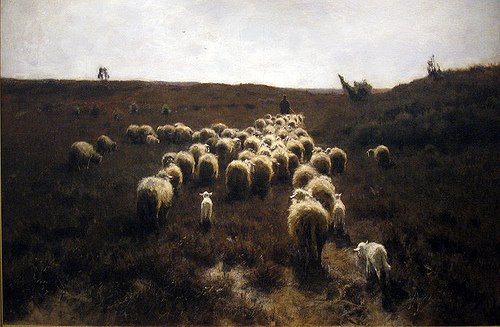
Return of the Flock” by Anton Mauve (19th Century) From the Philadelphia Museum of Art.

    Why do we feel alone? Does anybody care? Does anybody understand what we are going through? Where is God in all of this?

In this life, we often feel that people do not know the “real me.” They know us superficially, but they do not our real person. We go days on end, feeling as though we are an unknown cog in the wheel of life. What does God say about this?

“He calleth HIS OWN SHEEP BY NAME, and leadeth them out.” (John 10:3) What a comforting thought! Our Good Shepherd knows us! In God’s eyes, we are not a number, but we are the objects of His love! He knows what we are thinking. He knows our sorrows and joys. He knows our defeats and victories. He knows our loneliness and confusion.

His love and His commitment are the basis of His knowledge of us. For this reason, He takes us by the arm and says: “This is the way, walk ye in it.” (Isaiah 30:21) God knows us intimately, and He knows the pathway that is best for us. Not only does He show us the way, but He walks with us as we travel the path that He has laid out for us.

As Christ’s sheep, we do not have to walk alone. Jesus knows us, and He knows the way! The question is: “Will we travel with Him, as He leads us each day?”

Five Important Questions for the New Year

Winter Scene-Michigan USA

The year 2014 is upon us. Perhaps, we have already made some goals for the new year.  We may plan to do more exercise or eat less food. Perhaps, we want to travel more, or get out of debt. In light of our goals for 2014, will we take the time to do an inventory of our spiritual lives?

God says in Haggai 1:5: “Now therefore thus saith the Lord of hosts; Consider your ways”. God’s people had returned to their land, but they had neglected to rebuild the temple. They were too busy with their own affairs. to concern themselves with God and His priorities. Today, we often neglect our spiritual lives because we become preoccupied with all the activities that make demands on our time. Like the Israelites, have we neglected to take an inventory of our spiritual life?

The word “consider” means to note thoroughly, to perceive clearly, to think deeply. This word is used sixty-six times in the Bible. Why does God place such a priority on this word? Is it because He knows that we have the habit of keeping busy so that we don’t take the time to consider our walk with Him?  Here are five important questions that will help us to “consider our ways.”

1. How well do I know God?  “That I may know Him.” (Philippians 3:10) These words show Paul’s great desire to know the Lord in a personal way. He didn’t just want to know about God, but he wanted to know God intimately as His Father, Lord and Friend. Intimacy comes by spending time with God in His Word. We will study His Word to learn more about His character, His works, and His promises. Intimacy comes by spending time with God in prayer. Intimacy also comes by spending time meditating upon God. This will cause our love for Him to grow!

2. How well do I know myself?  ”Search me, O God, and know my heart: try me, and know my thoughts:” (Psalm 139:23) We often find it difficult to allow God to search every aspect of our life. We like to focus on all of our “good points” and we tend to ignore our sins or weaknesses. God gives us His Word to enable us to see areas that we need to change in our lives. When we read the Word of God, do we allow God to convict us of our sins? Do we allow Him to show us areas in our lives in which we need to improve? Do we allow Him to show us our apathy in spiritual matters? Examining our lives may not be pleasant, but it is a great step in moving forward in our spiritual lives in 2014.

3. How well do I use my time?  “Redeeming the time, because the days are evil.” (Ephesians 5:16)  Time is a gift that we often waste on matters that are not very important. We have many tools today to save time; yet we seem to have less time than ever. We allow the urgent to crowd out the important.

Big Ben-London England (Photo in Public Domain)

Big Ben-London England (Photo in Public Domain)

The Apostles Paul understood that his greatest priority in life was to mature in his faith.  “I press toward the mark for the prize of the high calling of God in Christ Jesus.” (Philippians 3:14) His time, efforts and focus were upon his spiritual well-being. We spend a lot of time taking care of our physical bodies, but what about our spiritual life? Time is a gift that we can invest in those things that promote our spiritual well-being.

4. How well do I encourage those around me?  We often focus upon our own lives and we forget the impact that our lives have upon other people. One of my favorite Bible characters is Barnabas. He was a man who was always encouraging others.

  • He encouraged others by his example. He did this with his generous gift to the church (Acts 4:36-37). The Bible also says about Barnabas: “He was a good man, and full of the Holy Ghost and of faith:” (Acts 9:23) If people followed our example what kind of Christian would they be?
  • He encouraged others by his friendship. Barnabas extended the hand of friendship to Paul when nobody else did. (Acts 9:26-27) People need friends, but our culture of isolation has kept us from reaching out to others with the needed hand of friendship.
  • He encouraged others with his words. Barnabas was a leader who encouraged the early church in Antioch with his words (Acts 9:23)  We can use our words to discourage a person or to encourage them.
  • He encouraged others by giving them a second chance. John Mark had failed on the first missionary journey. Paul didn’t want to take the chance to take John Mark on the second journey. Barnabas choose to give John Mark a second chance. This same John Mark would later write the Gospel of Mark. People will fail us, just as we fail others. Will we give them a second chance?

5. How well do I glorify God in all that I do?  The greatest purpose of our life is to bring glory to God. “Whether therefore ye eat, or drink, or whatsoever ye do, do all to the glory of God.” (1 Corinthians 10:31)  God wants to be glorified in all that we do. Do we glorify God in our thoughts, attitudes, words and actions? De we glorify God in our family? Do we glorify God at work or school? Do we glorify God with our plans and goals in life?

We have come to another crossroads in our lives. We have a great opportunity before us. What will we do with this opportunity?  We can move forward in our spiritual lives or we can remain stagnant. God desires us to move forward in our spiritual lives.

“Dear Heavenly Father, I am entering a new year. I know that I have fewer years ahead of me than behind me. It is critical that I allow you to clearly show me, what I need to do in this coming year. Help me to know you more intimately. Guide me as to the use of my time. Use me to encourage the people you bring into my life. Above all, I want to glorify you in all that I am and do.  Thank you for the blessings of 2013.  Thank you for continuing your work in and through my life. Amen”

Share this:

Ten Reasons to Thank God for the Valley

IMG_0056

The valley is a place that we never choose for ourselves, but God chooses it for us. His plan for our life doesn’t just include the blessings and the mountaintop experiences.  His plan includes the valleys. At times, we are so deep in a valley that we forget God and His promises.

The valley challenges our faith in many areas, including our trust in God, our steadfastness in Christ, and our love for God and others. When we enter the valley, we struggle with having a grateful heart before God. We look at our dire circumstances and feel numb. We feel as though we are watching a tragedy unfold and we are one of the main characters. We lose our focus upon God as we travel deeper into the valley.

After the initial shock of entering the valley, we realize that we need to cry out to God. We ask for deliverance. We ask for relief. We ask for strength. We ask for wisdom. However,  worry and fear are still affecting us spiritually. Why is there no relief? Have we neglected to thank God for our valley?  How can we travel through the valley with an ungrateful heart? Giving thanks to God helps to give us perspective concerning the valley. Gratefulness enables us to see the valley as a place of abundant blessings from God.

As the song writer wrote: “When upon life’s billows you are tempest-tossed; when you are discouraged thinking all is lost; Count your many blessings, name them one by one and it will surprise you what the Lord has done.” What are some of the reasons that we can thank God for the valley.

1. The valley gives us a thirst for God. Nothing can satisfy our soul in the valley but God Himself. “As the hart panteth after the water brooks, so panteth my soul after thee, O God.” (Psalm 42:1) The valley causes us to run into the arms of our loving Father. The valley creates a thirst that only our Heavenly Father can fulfill.

2. The valley gives us a broken and contrite heart. The valley has a way of bringing us down to our knees. The valley shows us our weakness and need for God’s help. Our heart becomes broken and humble before God. Nothing is more special in God’s eyes than when His children come to Him in complete desperation.  “The LORD is nigh unto them that are of a broken heart; and saveth such as be of a contrite spirit.” (Psalm 34:18)

3. The valley gives us an eternal perspective concerning life. Often we are so involved in the things of this life that we forget our glorious future with the Lord. When God takes us into the valley, our perspective on life is changed. The eternal suddenly becomes much more important in our lives. “Set your affections on things above, and not on things on the earth.” (Colossians 3:2)

4. The valley causes us to search our hearts. “Search me, O God, and know my heart: try me, and know my thoughts: (Psalm 139:23) The busyness of our lives often keeps us from reflecting upon our hearts. We go through the motions and neglect to take inventory of our lives. When God takes us into the valley, we find ourselves looking for answers. This helps us to search our hearts as to our past, present and future.

5. The valley can often bring marriages and families closer together. “Therefore his sisters sent unto him, saying, Lord, behold, he (Lazarus) whom thou lovest is sick.”
(John 11:3) Tragedy and heartache can bring families closer together or further apart. In the case of Lazarus, his death brought his family closer together. When one member of a family enters into a valley, it is a great opportunity for others in the family to travel with their loved one.

6. The valley tests our friendships. “A friend loveth at all times, and a brother is born for adversity.” (Proverbs 17:17) The valley exposes the true loyalty of a friend. A true friend doesn’t run away when their friend enters into the valley, but they encourage him. They do whatever they can to help their friend. There are many so-called friends who are exposed in the valley because they watch from the sidelines as their “friend” travels the painful road in the valley.

7. The valley gives us a hunger for the Word of God. “It is good for me that I have been afflicted; that I might learn thy statutes.” (Psalm 119:71) When times are going well, we read our Bibles out of obligation, but when we enter the valley we read our Bibles out of necessity. The Word of God opens up to us with its promises, comfort and even conviction.

8. The valley is a place where Jesus becomes our sweet companion. “Yea, though I walk through the valley of the shadow of death, I will fear no evil: for thou art with me; thy rod and thy staff they comfort me.” (Psalm 23:4) The valley is a place where we may feel lonely, but we are never alone. We have a companion who walks every step of the way in the valley with us. The walk in the valley is difficult, but we can find it pleasant because we experience a closeness to the Lord that we don’t normally.experience.

9. The valley broadens our ministry towards others. “Who comforteth us in all our tribulation, that we may be able to comfort them which are in any trouble, by the comfort wherewith we ourselves are comforted of God.” (2 Corinthians 1:4) God’s ministry of comfort, strength and encouragement in our valley enables us to have compassion upon others who are in the valley. When we respond to the valley in God’s way, we will find many doors of ministry that will become open to us.

10. The valley enables others to minister unto us. “The Lord give mercy unto the house of Onesiphorus; for he oft refreshed me, and was not ashamed of my chain:” (2 Timothy 1:16) The valley enables others to reach out to us. We become thirsty for encouragement and people see this need and refresh us. They can refresh us with their presence, with their words, and with their prayers.

Yes, the valley doesn’t seem attractive when we first enter; however, as time goes by, we learn the secret of the valley. This is a place of great blessing. This is a place of experiencing God’s love. This is a place of spiritual growth. The key to having the valley become a very positive experience is to thank God for this time in our lives.

“Dear Lord, I didn’t ask for this valley. I didn’t expect this valley. Yes, this valley has been difficult; however I thank you for this valley. It has been an experience that I wouldn’t trade. You have used this valley in my life in so many ways! Please don’t ever stop your work in my life. Thank you for the your wisdom, tenderness, strength and love that I am experiencing in this valley. Amen.”