God’s Will or My Will? (Psalm 31:3)

Blue Ridge Parkway-Photo by: Mark Booth

“God’s Will” are words that are commonly used by Christians for many decisions that they make. It sounds spiritual but is this really true? In doing “God’s will” can we be doing our own will? The Psalmist David often struggled with God’s will for his own life. As king, he faced many tough decisions. He knew that his decisions, not only affected him, but many other people. What was David’s guiding principle in acknowledging God’s will for his life? “For thou art my rock and my fortress; therefore FOR THY NAME’S SAKE lead me, and guide me.” (Psalm 31:3)

David understood that doing God’s will had nothing to do with his own desires and goals.  God’s will had everything to do with God’s glory. David knew that motivation was the key in recognizing God’s will for his life. When David pleased himself, he brought harm to himself and others. When David sought to bring glory to God, he brought blessing to himself and others.

There are many people who say they are doing “God’s will”, but it is very questionable. Their motivation seems self-centered instead of God-centered. Sometimes, we ignore Biblical principles in doing “God’s will.” Sometimes, we break commitments in doing “God’s will”. Sometimes, we possess an angry spirit in doing “God’s will. Sometimes, a fear of man is the determining factor in doing “God’s will.” Are we using God as an excuse for fulfilling our own plans and desires?

When we seek to understand the will of God for our lives, we should start where David started. Am I doing this “For His name’s sake”? Will God be glorified in this decision? We often make decisions based on how it will affect our lives, but do we think about God and His glory?

David longed to do God’s will because he knew that in doing His will, he would bring glory to the very One he loved. Every aspect of our lives should bring glory to our God whom we love. When our family is in the will of God, we glorify God. When our use of time is in the will of God, we glorify God. When our service unto God is in the will of God, we glorify God. When our relationships with others are in the will of God, we glorify God.

In conclusion, when we say we are doing “God’s will” let us be very careful to look deep into our hearts and check our motivation for doing “God’s will”. The guiding principle is: “Am I doing this for my name’s sake or for His name’s sake?”

“Dear Lord, as we seek your guidance, we often look at what makes us comfortable, and what makes us happy. We totally forget what brings glory to your name. Please help us, to keep our eyes upon you as we make decisions. The important thing is not what we want, but what you want. May we not confuse the two. Amen.”


A Prison of Mine Own Making: Am I a People-Pleaser?

old-prison-2-1093527-mA prison is a place of confinement, a place without freedom, a place of loneliness. Nobody would voluntarily enter a prison. However, many people have entered into a prison of their own making.  This prison is the prison of being a people-pleaser.  A people-pleaser is one who desires to please others before pleasing God. By trying to please others, they face the great problem of trying to please competing interests.  A people-pleaser doesn’t make decisions in light of what God says, but what others expect.

We are susceptible to become a people-pleaser. It is natural for us to want others to like and accept us. Being a people-pleasure is difficult because there are many competing interests that are coming from various directions. What one person thinks is the right decision; another person takes the opposite view. As a people-pleaser, we live our lives by the opinions and demands of others, instead of seeking to please our Lord God.

One Christian who found freedom from the prison of being a people-pleaser was the Apostle Paul. In his ministry, Paul constantly received criticism from others. Paul could find acceptance with various people by surrendering his ministry to the opinions of others. However, Paul chose not to enter the prison of being a people-pleaser. He found freedom by desiring to please only one person, God, His Father. “Even so we speak; not as pleasing men, but God, which trieth our hearts.” (1 Thessalonians 2:4)

The Lighthouse at Port  Sanilac, Michigan.  Photo by Mark J. Booth
The Lighthouse at Port
Sanilac, Michigan. Photo by Mark J. Booth

How can we find the freedom that Paul found?  First of all, Paul understood the danger of being a pleaser of men. He knew that it would be impossible to please God, if he was always seeking to please people with their ever-changing opinions, desires and goals. He also understood that men, being sinners, could not always see life from God’s perspective. Paul knew that when he kept his eyes upon what men thought, he would soon forget to keep his eyes focused upon God.

Secondly, Paul understood that God was his Master. We don’t serve ten masters or twenty masters. No, we serve one Master. Our goal is to please the very One who loves us and knows what is best for us. We submit to Him as Lord. Yes, in living for our Master, we may serve others, but our eyes are always upon pleasing Him. When we become a people-pleaser, we no longer are submitting to the Lord as our Master. Many people have ruined their lives because they sought to please others at the cost of pleasing the Lord God

Thirdly, people are very quick to wrongly judge our motives; God knows our motives because he knows our every thought and attitude. Paul understood that God is the One who will ultimately test our hearts. God knows not only what we do, but why we do it. A people-pleaser can’t please everybody thus they feel frustration and guilty. People are often quite harsh in their judgment of our actions. God sees our hearts. If our hearts are clear before God then we will be free from being a people-pleaser.

Fourthly, people tend to be selfish. They want to control or even bully others to follow their desires, opinions and goals. Their desire is self-focused instead of God-focused. God’s will is not only for His own Glory, but for our benefit. Others can’t see the big picture, God sees it. He loves us and wants what is best for us. When we focus on God’s wisdom and plan, we will be free from the limited understanding of those around us.

Being a Christian doesn’t mean that we ignore the people we love and serve, but it does mean that their opinions should not imprison us. God can use the thoughts of others to give us direction, but we must not take our focus from the One whom we are truly serving. Yes, we can try to make those around us happy, but it must never be at the cost of displeasing our Master. When we become imprisoned by the desires of others, we will never be free to serve our True Master.

“Dear Lord, I find myself tempted to be a people-pleaser. I don’t enjoy the criticism that comes my way when I make decisions. I want you to use me in the lives of others. However, I realize that when I become imprisoned by the desires of others, I can no longer be useful to you or to others. Please help me to keep my focus upon you. Help me to discern the difference between my will and your will. I know in my heart, that in pleasing you that I will reach my full potential of being a blessing to others.


Do Not Fear God’s Plan. Embrace it!

The Smoky Mountains at Sunrise (Photo by: Mark J. Booth)

A young girl was suddenly confronted by a strange visitor whom she had never seen before in her village of Nazareth. This visitor greeted her with very strange words. “Hail, thou that art highly favoured, the Lord is with thee: blessed art thou among women.”

What was going on in Mary’s mind as she heard these words? The Bible says that she was troubled in her heart and was quite perplexed.  She probably couldn’t understand why this visitor was talking with her.  In her humility, she couldn’t believe what the visitor was saying about her character and her close walk with God.

Mary’s life would soon change in a way that she would never imagine. God chose her to give birth to the Messiah, Jesus Christ.  Because of God’s plan for her life, she would almost lose her future husband Joseph.  She would face misunderstanding.  She would give birth to the Messiah in a stable.  She would see her son suffer and then die upon the cross.  Mary didn’t choose this type of life, but God chose it for her.

Mary had a choice when her visitor, God’s angel, shared God’s plan with her. She could fear God’s plan and reject it, or she could heed the words of the angel: “Fear not, Mary: for thou hast found favour with God.” (Luke 1:30) Mary chose to embrace God’s plan when she said: “Behold the handmaid of the Lord; be it unto me according to thy word.” (Luke 1:38) Mary cast away her fears and embraced God’s plan for her life in spite of the obstacles she would face.

God’s plan can create fear in our lives.  We fear surrendering ourselves totally to God because His plan may include pain, suffering, rejection, and sacrifice.  Our fear causes us to forget that our loving God knows what is best for us and for those around us.  We find it difficult to say: “I am your servant. Do as you please with my life.”

All through the Bible, we see people who did not fear God’s plan, but embraced it.

  • Abraham embraced God’s plan when he left all that he knew to go to an unknown land.
  • Moses embraced God’s plan when he left the quiet life in the desert to lead God’s people.
  • Joshua embraced God’s plan when he defeated Jericho according to God’s plan of action.
  • Ruth embraced God’s plan when she left her land of Moab to go to Israel.
  • Jeremiah embraced God’s plan in spite of the persecution he faced.
  • Hosea embraced God’s plan when it didn’t make sense to him.
  • Steven embraced God’s plan though it meant certain death.

Will we listen to God’s voice when he says: “Fear Not”?  Will we embrace His plan regardless of the consequences?  When we embrace God’s plan, we will not only be blessed of God, but we will also be a blessing to others as Mary has been a blessing to the world.

David shares His desire to embrace God’s plan when he wrote: “Teach me to do thy will; for thou art my God: thy spirit is good; lead me into the land of uprightness.”
(Psalm 143:10) God is good and His plans for our lives will lead us into a life of blessing and joy. Let’s not fear God’s plan today, but let us embrace His plan with all of our hearts.

When There is No One Else (Confiding in God)

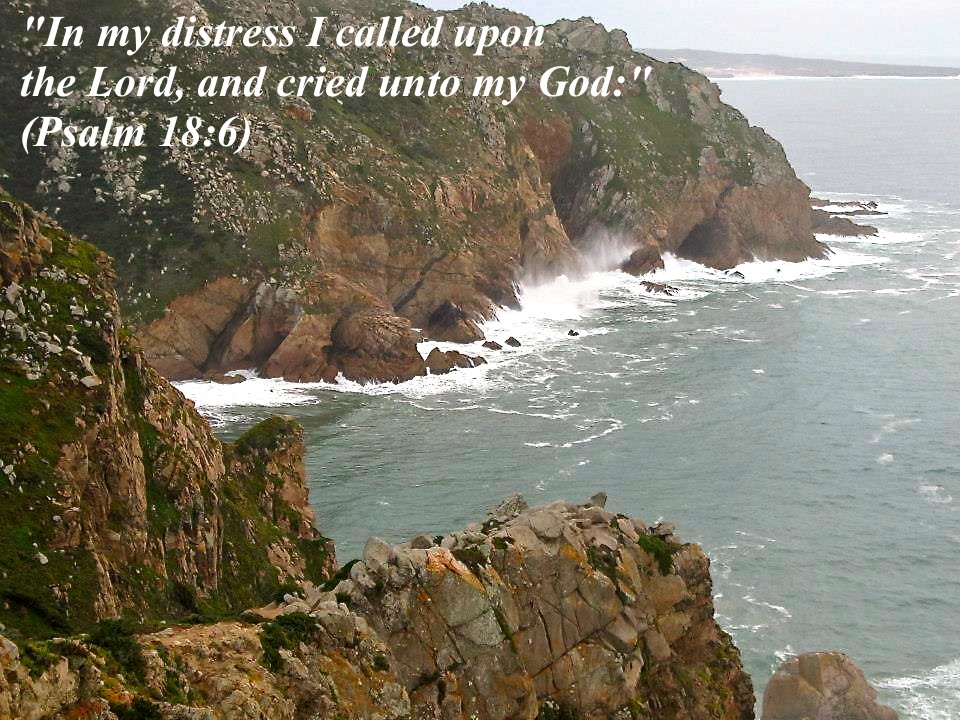
Cabo da Roca, Portugal Photo by: Mark J. Booth
Cabo da Roca, Portugal
Photo by: Mark J. Booth

“In my distress I called upon the LORD, and cried unto my God: he heard my voice out of his temple, and my cry came before him, even into his ears.” (Psalm 18:6)

“Will anybody listen to me?”  Have you ever caught yourself thinking this very thought?  Yes, throughout life there are times when we feel alone.  We think no one understands.  When these times occur, we must not forget that there is One who is always available to listen.  He understands exactly how we feel.  Are we prepared to confide in Him?

When we confide in the Lord, we are saying:  “I trust you, and I know that you care about me.  I pour out my heart to you, because I know that you understand.  Please show me what I need to do.”

Why do we need to confide in the Lord?

Has a situation ever come our way and we don’t know what to do?  We feel helpless in the midst of what is happening around us.  Many years ago, King Jehoshaphat of Judah faced the near certain defeat of his army.  Within himself there was no strength or wisdom to handle this dire situation.  He did what we all must do when we are confused and helpless. He went to the Lord. “O our God, wilt thou not judge them? for we have no might against this great company that cometh against us; neither know we what to do: but our eyes are upon thee.” (2 Chronicles 20:12) God is waiting for us to confide in Him in the midst of our confusion.  At times, we don’t confide in God because we are reluctant to admit our need of Him.

Another reason we need to confide in the Lord is that our own viewpoint can lead us astray.  You have heard the saying: “Let your heart be your guide.”  However, God tells us why our heart is not a reliable guide for our life. “The heart is deceitful above all things, and desperately wicked: who can know it? ” (Jeremiah 17:9)  God makes it clear that our heart is not to be trusted.  We often make decisions based upon our own selfishness or bias.  When we confide in God, we will see life from His perspective.

Trials, heartaches, and difficulties fill our life.  We can’t travel the hard road of this life without continually confiding in our Lord.  Jesus said: “These things I have spoken unto you, that in me ye might have peace. In the world ye shall have tribulation: but be of good cheer; I have overcome the world.” (John 16:33)  When tribulations come, do we forget that the Lord is greater than any trial that comes into our life?  When we cry out to Him in midst of our pain, He responds to us.  When an emergency happens in this life we call 911.  Why are we so reluctant to cry out to the Lord in the midst of our pain?

People say: “I  would be a good Christian, if it wasn’t for other people.”  Yes, other people may hurt us, misunderstand us, ignore us and dislike us, but there is a friend who is always there.  His name is Jesus!  David confided in God when he faced powerful enemies; so can we. “Attend unto me, and hear me: I mourn in my complaint, and make a noise;” (Psalm 55:2) The Lord is a Friend who will never leave us or disappoint us.  Will we learn to confide in Him when we have problems with others?

Finally, we need to confide in God because of His Greatness.  He is worthy of our faith.  God is our all-knowing, all-wise, all-powerful Lord and Friend.  He is our High Priest to whom we can go at any time. He is a refuge in the midst of any storm. “Trust in him at all times; ye people, pour out your heart before him: God is a refuge for us.” (Psalm 62:8) God’s greatness is like a magnet that draws us to Him.  He can handle any situation that we take to Him. 

How do we confide in the Lord?

Confiding in the Lord is simply to share our requests openly with Him. He already knows what is happening in our lives, but He wants us to come before Him in complete faith and honesty. “Deliver me from mine enemies, O my God.” (Psalm 59:1)  The Psalmist understood that he could share any request with God, and He would hear him.  Our God desires us to seek Him.  His love means that His ears are always open to our cries unto Him.

As we confide in Him, we must also remember the importance of having a grateful heart. Gratitude is a way of confiding in the Lord that we are totally dependent upon Him.  In Philippians 4:6, Paul writes: “In everything by prayer and supplication, with thanksgiving.” When we cry out to God, we thank Him for all that He is doing in our lives, and all that He will do in our lives.

Confiding in God is also demonstrated when we come before Him in desperation.  We don’t see God as part of the solution, or maybe a possible solution. No! God is the only solution.  The Psalmist writes: “This poor man cried, and the Lord heard him, and saved him out of all his troubles.” (Psalm 34:6) Our desperate cry is saying: “I need you, Lord.  You alone can help me.”  God will respond to this humble cry.

We are often tempted to seek to handle life in our own wisdom and strength.  Yet, the Lord is always there. He is always ready to listen.  Why do we choose failure in our own strength and wisdom, instead of choosing success in His strength and wisdom?  God is waiting to hear from us today!  Will we confide in Him?

Am I Suffering from Spiritual Amnesia?

A Boca do Inferno in Portugal.  Photo by: Mark J Booth
A Boca do Inferno in Portugal. Photo by: Mark J Booth

“They forgot God their savior, which had done great things in Egypt;”
(Psalm 106:21)

The terror of forgetting not only affects people with dementia, but also people who experience amnesia. The word “amnesia” comes from two Greek words which mean “without memory”. When a person loses their memory, they lose not only their past, but also they often forget recent events. This can create confusion, a lack of peace and problems with others.

In the spiritual realm, we can also suffer amnesia. This amnesia is much like the physical amnesia that people suffer.  A person with spiritual amnesia may feel confused spiritually.  They may become anxious. This person has some vague memory of God, but they have lost the vibrancy of the Christian faith.

The nation of Israel witnessed the power of God when He poured out the ten plagues upon Egypt. They saw his salvation during the night of Passover. They also saw God’s power when He parted the Red Sea. Throughout their wanderings in the Wilderness, God constantly provided for them. Would they remember these blessings from God? No! God says of His people: “They forgot God their saviour, which had done great things in Egypt;” (Psalm 106:21). 

Israel suffered spiritual amnesia. They had forgotten God, His blessings, His promises and His commands. How did this happen? Israel had taken their eyes off of the Lord. Their focus was upon the heathen nations around them. They conveniently forgot God; so that they could live their lives as they pleased.

Today, we often suffer spiritual amnesia. We conveniently forget God and His Word when we choose to live our lives to please ourselves and not to please God. We open the door to sin when we suffer from spiritual amnesia. Thankfully, God has provided a cure for our spiritual amnesia.

Jonah, God’s prophet, had a case of spiritual amnesia when he decided to forget God’s command to go to Nineveh by going the other direction. God disciplined Jonah when He placed him in belly of the great fish.  While there, Jonah repented of his spiritual amnesia with these words: When my soul fainted within me I remembered the Lord: and my prayer came in unto thee, into thine holy temple.” (Jonah 2:7)

Like Jonah, we find ourselves experiencing tough times as a result of our spiritual amnesia. We realize that forgetting God has brought us to a place of desperation. We often make matters worse by trying to resolve the matter without God. We feel that we are quite distant from God. What can we do in this situation?

First of all, like Jonah, we need to see our desperate situation. Jonah understood that his spiritual amnesia had created this problem. He was now awake to the fact that God was His only hope. He was suffering the consequences of his sin. We begin to experience the cure for our spiritual amnesia when we see our hopelessness without the Lord.

After recognizing our hopeless situation, we need to remember God. Jonah chose to remember God in the most difficult time of his life. Remembering God means that we remember not only who He is, but also all that His has done for us. The list below gives us some truths that we often forget when we suffer from spiritual amnesia. How many of these have we forgotten? Will we choose to remember these?

  • God’s attributes
  • God’s presence
  • God’s power
  • God’s promises
  • God’s commands
  • God’s love for us
  • The Gospel of salvation
  • God’s view of man
  • The Indwelling Holy Spirit

Thirdly, Jonah remembered the gift of prayer. From inside the fish, Jonah found a prayer closet and poured out his heart to God. Jonah’ s prayer was not casual or flippant. It  was desperate and dependent. Spiritual amnesia results in little or no prayer. God places us in a tight spot; so that we can not only remember Him, but that we also remember the gift of fervent prayer. If our prayers are dry, it is a sure sign that we are suffering from spiritual amnesia.

Have we seen the reality of spiritual amnesia in our life? God will go to great extremes to bring back our memory. He is waiting for us to turn back to Him, and remember Him!

“Dear Lord, I often choose to suffer with spiritual amnesia. I forget your presence in my life, as well as your commands and your blessings. I focus upon myself and my desires. I have a fear of man instead of a fear of you. Anxiety fills my life because I have forgotten your peace. Despair fills my life because I have forgotten your joy. Like Jonah, I need to remember you again. I need to seek you with my whole heart. Thank you for your forgiveness. Please keep me close to you so that I may not suffer from spiritual amnesia again. Amen”

When I am Afraid

Guincho Beach outside of Cascais, Portugal (Photo by Mark J Booth)

“What time I am afraid, I will trust in thee.” (Psalm 56:3)

“Mom, please leave the hall light on and don’t close the door.” These words were almost a nightly ritual when I was a child. Growing up I was afraid of many things. When I went to bed, I was afraid of the dark. When I went to school, I was afraid of failure. When I tried to become friends with someone, I was afraid of rejection. When I heard about somebody having cancer, I was afraid that I would get cancer. Being afraid is something that we struggle with throughout our lives.  We may outgrow some of our childhood fears, but we replace them with new fears.

As adults, we may suppress our fears before others, but deep down, we have to admit that we are still afraid of many things. We are afraid of what the future holds in our lives.  We fear rejection by people around us. Fear can overtake us as we contemplate death.  Sickness or financial reversal always seem to be lurking around the corner. We dread what will happen next.

Being afraid has been a reality since the fall of man. Adam and Eve were afraid of God after they had eaten the forbidden fruit. Abraham was afraid of Pharaoh when he and Sarah fled to Egypt to escape a famine. Moses was afraid of being executed for murder; so he fled to the wilderness. The disciples were afraid of the storm, and cried out to the Lord. Peter was afraid of those who were warming up by the fire; so he  denied the Lord.  John Mark was afraid of persecution for preaching the Gospel; so he abandoned his mission work.

David faced several events in his life that caused him to be afraid.  How did he handle those times of fear. In Psalm 56:3, David writes: “What time I am afraid, I will trust in thee.”  David understood the reality of his fear, but he also remembered the reality of God. Let’s join David and see how we are to handle those times when we are afraid.

Before we can share our fear with God, we must recognize that we are afraid. Most of the time we are afraid of the “What ifs” in life. “What if something happens to me?” “What if I lose my job?” “What if I can’t complete my assignment?” Our fears often creep up upon us in an unexpected way. Soon, we become paralyzed by our fear, like a deer staring into the headlights of an oncoming car.

Other times, we become afraid of something that is not imaginary, but very real. We receive bad news from the doctor. We receive a notice in our mailbox that our house will soon be repossessed. David recognizes these times of being afraid. He doesn’t face his fear with a false bravado, but he recognizes his fear. He knows that the relief from his fear doesn’t come from within himself, but in the Living God.

After recognizing his fear, David focuses upon the One who can take care of his fear. God alone has the power, strength, love, and wisdom to carry us through our fear.  When the disciples were afraid of the storm, they went to Jesus who was sleeping in the boat. They knew that He alone could calm the storm about them. Yes, the storm was threatening. Yes, the storm was violent, but they knew that the Lord would carry them through this storm.

Our fears often control us because we forget the greatness of our God. David, as he faced Goliath, recognized that there was One greater than Goliath. Our God can deal with whatever Goliath we are facing. The more we grow in our knowledge of God, the more we will live a life free from fear.

After recognizing his fear, and focusing upon God’s greatness, David now entrusts his life to God. The word “trust” in Psalm 56:3 has the idea of leaning upon. David understands that the only way to conquer his fear is to totally lean upon God as he walks through the dangerous path that is before him.

As David wrote in Psalm 23, “Yea, though I walk through the valley of the shadow of death, I will fear no evil: for thou art with me;” Even in the most dangerous road of all, death, David is not afraid because he is leaning upon the Lord who is walking with him through this very dark valley.

Like David, we face many dangerous roads. Yes, some of the dangers are imaginary, but many of the dangers are real. If we choose to walk those dangerous roads alone. our fears will consume us. However, if we choose to lean upon Our Loving, All-Powerful Lord, we can walk upon the most dangerous road with courage.

“Dear Lord, we live in a world filled with danger. We find it easy allow fear to control us.  especially when we forget you. Help us to lean upon you completely, as we travel every dangerous road that is before us.  We do not ask to live a life without danger, but please be with us as we travel into danger. Thank you for allowing us to lean upon you no matter how dark the path is before us. Teach us that we don’t have to be afraid, because you are greater than any fear. Amen”

Does Jesus Care? (1 Peter 5:7)

Guincho Beach in Portugal (Photo by Mark J. Booth)

Does Jesus care about what is happening in my life? Does He care about me personally? Many believers to whom Peter wrote had these same questions, because they were facing a period of great persecution for their faith. Their safety and well-being were in peril.  Peter understood persecution.  He had endured imprisonment, and misunderstanding. Jesus had clearly prophesied that one day Peter would die a violent for His sake.

Peter encouraged these beleaguered believers with a letter of a great hope in Jesus Christ. Peter reminded the believers that Jesus does know and care about what is happening in their lives.  The words: “Casting all your care upon him; for he careth for you.” (1 Peter 5:7) brought great comfort to the readers of Peter’s letter. Today, these same words bring comfort, encouragement and hope to each one of us.

What does it mean “to cast our care upon Jesus”. First of all the word “care” has the idea of a burden, worry, or an anxious thought. There are many causes of “care” in our lives.

  1. We have the “care” for things that are outside of ourselves.  These include natural catastrophes, rejection by others, and political conflict in our nation.  Our news media has a great knack of creating anxiety upon those who are watching or listening to what they have to say. We feel helpless in the midst of a world that seems to be spinning out of control.
  2. We have the “care” for our loved ones. Many a parent lives a life filled with worry because of their children. We worry about their safety, their future, and their health. Perhaps, we have loved ones who have turned aside from the Lord. This also creates anxiety.
  3. We have the “care” concerning our own lives. We have anxiety over our future, our finances, our failures, our sins, and our health.  As we grow older we become anxious about death and leaving our loved ones behind. If a person doesn’t have the assurance of their salvation, there is the worry about life after death.

Peter admits that we have “cares” but he also tells us what to do with these cares.  Our cares are to be “cast” upon Jesus. The word “cast” has the idea of throwing a weight and placing it upon an object that can bear the weight. Perhaps, the idea can be seen by throwing a bale of hay on a wagon. Why carry the bale of hay when the wagon can do the work?

Why do we carry our “cares” with us when Jesus can carry any load that we place upon Him. He wants us to “cast our all of our cares” upon Him because He cares about what happens in our life. He died for us when we were his enemies. Will He not take care of us, now that we belong to Him?

What keeps us from casting all of our cares upon Jesus?  Could it be pride?  Could it be stubbornness? Could it be a lack of faith? Jesus’ arms are open. He is saying: “Give me that “care” that has you feeling exhausted, overwhelmed and discouraged. I can handle anything you give me. Will you not trust me today?”

Clinging to God

Kangaroos in Australia (Photo by: Mark j. Booth)

Do you remember as a child when you would cling to your dad or mom when you felt danger approaching? “My soul followeth hard after thee: thy right hand upholdeth me.” (Psalm 63:8) The words “followeth hard” have the idea of clinging unto the Lord. When danger, temptations and sorrows approach, the best response is to cling to Our Heavenly Father. He alone can carry us through the tough times.

The world is a dangerous place for every child of God. We face a variety of dangers, including temptations from Satan, the lusts of our own flesh, and pressures from the world to conform. Because of these dangers, we need to cling to our Lord each step of the way. When we let go of the Lord, we not only find ourselves being exposed to dangers from without, but also the dangers from within our hearts.

The first aspect of clinging unto the Lord is total dependence upon Him.  We know that within ourselves there is no hope to face the dangers and pitfalls of this life. When crossing a very busy street, I would cling to my Dad’s hand. I was completely incapable of crossing the many lanes of traffic alone. The cars were large and moving fast. I completely depended upon my Dad to navigate me to the other side of the street.

All through the Word of God, we see people who forsook their own ability and completely depended upon God. David when he battled Goliath totally depended upon the Lord. Like David, no matter how big the danger before us, we can cling unto our Heavenly Father.  He will never push us away.

Joseph continually faced pressure from Potiphar’s wife to commit adultery. The pressure was great to yield to this temptation, but Joseph continually depended upon God. Daniel could have compromised his faith several times while in Babylon; yet he depended totally upon God. Ruth could have lived a life of great despair, but she depended upon God in the midst of all the trials she faced. We have the same Heavenly Father that each of these had. We can and need to depend upon Him.

A second aspect of clinging unto the Lord is our complete love for Him. Peter’s denial of the Lord occurred when he placed his love for himself above his love for the Lord Jesus Christ. After the resurrection, Jesus emphasized this truth to Peter when He asked him three times: “Do you love me?” Jesus wanted Peter to know that there was great safety in clinging to Him in love.  Peter would face innumerable trials, but he clung to the Lord in love.

How close are we to God? Have we left our first love like the church at Ephesus did? When our love grows cold God seems distant. We don’t speak to Him with words of affection. We don’t open His Word with enthusiasm. We live our lives as though God is not there. This lack of love creates greater opportunities to fall into temptations, to doubt God’s love and provision, and to live a selfish life before others.

Loving God means that we need to stay as close to Him as possible.  We want to listen to His Word. We enjoy our times of communion with Him. We are not ashamed of Him, but we are proud to call God, Our Heavenly Father.

A third aspect of clinging to God is to recognize the dangers of this life. Last year, while in Australia, I came across a joey with its mother kangaroo. The joey was lying close to its mother; however when I came closer to the joey, the joey recognized danger.  He immediately leaped to its feet and jumped into his mother’s pouch. The joey found complete safety in his mother’s pouch.

Do we recognize the dangers in our life? Jesus constantly warns His followers of the ways of this world. He knows that we can easily become apathetic and careless in our spiritual lives. We don’t see the need of clinging to the Lord because we have become insensitive to the dangers around us and within us.

God is always there to uphold us, as long as we are always ready to cling unto Him. He holds His arms out as though saying: “Come unto me, I will protect you. I will love you. I will guide you through this situation.” We mustn’t let pride, self-will, ignorance, and busyness keep us from clinging to our Heavenly Father.

“Dear Heavenly Father, I have crossed many dangerous roads in my life. Sometimes, I have chosen to cross those roads without you. This has created difficulties for me and others. Thank you for the many times, that I have clung to you and you took me through those dangerous roads. I know that in the future I can depend upon you regardless of what happens. Thank you for first loving me; so that I can love you in return. Amen”

Parental Piety (An excerpt from a new book by David de Bruyn)

save-them-from-secularism2

Dear Readers, very rarely do I include writings from other sources in my blog; however, this new Kindle Book by David de Bruyn is a very worthwhile read for all parents and grandparents. The title of the book is: “Save them from Secularism: Pre-Evangelism for Your Children.”  This Kindle Book is presently being offered free.  Here is the link: http://www.amazon.com/dp/B00BWRDT7Q

I have known the author since he was a child attending our church in Johannesburg, South Africa. David presently is the pastor of New Covenant Baptist Church in Sandringham, Johannesburg, South Africa.

Enjoy this one chapter of the book. It is my prayer and desire that you will download the whole book.

Chapter 2:Parental Piety by David de Bruyn

The first and greatest commandment is followed by a commandment to teach children to do the same (Deuteronomy 6:4-9). Our goal as Christian parents should be nothing less than to help shape our children so that they will, by grace, become ardent lovers of God. We have said this happens not merely by telling our children to love God, but by shaping the child’s imagination.   Probably one of the first analogies the child’s imagination receives is the analogy of his parents’ piety. This provides him with a picture of what it is like to be in a relationship with God.

Before a child knows anything about justification, penal substitution, or the nature of God, he knows what a relationship with God is like. Or at least, he knows what his believing parents express it to be like. The religious imagination of child is shaped by being exposed to his parents’ piety, and it is their example that gives him his first introduction to how God is to be loved, and if God ought to be loved.

This is probably why right after telling Israel that they are to love Him with all the heart, soul and might, God tells them that these words about loving God ultimately “which I command you today shall be in your heart.” That is, these words are to be internalized and understood and practised by the parents themselves first. Following that, verse 7 kicks in. “You shall teach them diligently to your children, and shall talk of them when you sit in your house, when you walk by the way, when you lie down, and when you rise up.”

Certainly, this teaching will take the form of direct instruction. However, our concern in this book is how the non-discursive, non-cognitive faculty of knowing is shaped. Certainly then, part of the teaching is the fleshed-out example of love for God seen in the parents.

Loving God ultimately can be thought of as ultimate dependence, ultimate devotion and ultimate delight. When we love God ultimately, we regard Him as ultimately reliable, ultimately valuable, and ultimately desirable. We do not trust, commit to, or rejoice in anything besides God as an end. All else are means: He alone is the end.

In a family, this kind of love for God is seen in very tangible ways. When in the middle of a health or financial or emotional crisis, Dad says to the family, “We can be very thankful for what God has given us. Let’s turn to Him now in prayer, and ask Him for grace”, that lesson speaks to little hearts in powerful ways. Gratitude and contentment say more than 100 sermons. When Dad says, “We’ve barely got petrol in the tank, but we know God wants us to worship Him. We’ll trust that God will enable what He commands.” And do you know what God loves to do when those little eyes are watching that act of ultimate dependence? Provide. Supply. Protect.

When the child is groaning about a sore throat on Monday morning, and Dad says, “Get out of that bed, and get ready, you are going to school!”, he is teaching the importance of education. But when the child has the same groans about a sore throat on Sunday morning, and Dad says, “Well, just take it easy and rest this morning,” he has taught something else. He has taught that education takes priority over worship. He has taught that our devotion to education ought to exceed our devotion to God.

When Mom will drive from this side of the city for swimming to that side of the city for tennis or ballet, to the other side for extra maths, and back again for soccer, and finally home, racking up a good 100 kilometres in the process, the child might learn that Mom and Dad like him to have activities. But when they say, “We can’t go to the Wednesday Evening service, it’s too much driving, and petrol is getting more expensive”, he learns about priorities. Petrol costs and driving time aren’t an issue if it is extra-murals or education, but very high hurdles if it is church. He has just learned how committed one should be to God, and it is not an ultimate commitment.

Children know what we love. They see it when our eyes sparkle when we talk about what delights us. They see how we anticipate the things we really love. They see how we reminisce over the things we love. And they see how we connect those things to God, if we do. They see what our attitude is towards the things of God.

If Dad’s sighing heavily as everyone gets in the car on Sunday, but he’s cheerfully buoyant before the start of a rugby game on TV, he communicates which brings more joy. If Mom is humming away while she copies photos to Facebook and makes scrap-book albums, but looks like she’s eaten lemons during the singing of hymns, she communicates what brings her joy.

And make no mistake, those little eyes are on you in corporate worship – do you enjoy and understand those hymns, or do you just mouth them? Do you love God’s Word and read it with hunger? Do you communicate your relish for the Word before and after? They notice when you’re soaking in the Word, and they notice when you’re looking at your watch. And later on, they might remember that you don’t do that during a movie.

Before we tell them so, we show our children what we think is reliable, valuable and desirable.  God says there is only One who deserves that kind of love. That should be the day-in, day-out message of our homes.

Am I a Spiritual Demolition Expert?

346-hudsonPano

On October 24, 1998, there occurred a very sad event in the history of Detroit.  On this day, the J.L. Hudson’s department store demolished. This landmark of downtown Detroit was, at one time, the second largest department store building in the nation.

The Hudson’s building was prepared for demolition by experts who knew what they were doing. In a matter of seconds, the building came tumbling down. The demolition experts had done their work.

In the spiritual realm, there are also demolition experts. These people have a talent to harm other believers and churches. They may do their work with a spiritual veneer, like the Pharisees did in the time of Jesus.  They may have a goal of “doing what is good”. They may be sincere or “mean well”.  Whether intentional or not, these demolition experts cause broken lives and churches.

We may not think that we are a demolition expert, but there is a demolition expert in all of us.  We have all caused harm to an individual or to a church fellowship. What are some of the qualifications of being a spiritual demolition expert?

One of the first qualifications of a demolition expert is pride. Pride causes us to feel superior to others. Because we are better than others, we have every right to condemn them and put them in their place.  Pride means that we are never open to correction, but we are always open to correct others. It also causes us to love self instead of loving others. We see this in the life of Saul when he became jealous of the acclaim that David received.  Saul’s pride caused his death, the downfall of his family, harm to the Kingdom of Israel, and great grief to the life of David.

Another qualification of a spiritual demolition expert is an uncontrolled tongue.  This person’s tongue can destroy a person or a church in various ways. They can speak words of slander about others. They also can create divisions among people through gossip. Angry words have also destroyed people and churches. These people are experts at welding their tongue to bring harm to many with whom they come into contact. James warned us of the danger of the tongue when he wrote: “And the tongue is a fire, a world of iniquity: so is the tongue among our members, that it defileth the whole body, and setteth on fire the course of nature; and it is set on fire of hell.” (James 3:6)

A third qualification of a spiritual demolition expert is the “Holy Spirit Syndrome”.  This individual feels like they have the answer for everybody’s situation. They know what others need to do and how they should do it. This doesn’t seem to bring harm to others. However, the person with this syndrome keeps others from developing their own personal walk with the Lord. Instead of looking to the Word of God or to the Holy Spirit for guidance and direction, many people look to the person who has become “their holy spirit”.

A fourth qualification of a spiritual demolition expert is a person who lives their lives to please themselves. This person hurts others because they don’t see the importance of their example. They may say: “I don’t care what other people think. It is my life.!” This person leads others down the path of sin, rebellion and destruction. They have forgotten what Paul said: “For ye are bought with a price: therefore glorify God in your body, and in your spirit, which are God’s.” (1 Corinthians 6:20)

God has not called us to be demolition experts. He has called us to be builders. “Wherefore comfort yourselves together, and edify one another, even as also ye do.” (Ephesians 4:11) A builder shows care, concern and sacrifice in producing a building.  We need to have this same concern and love for individuals as well as for the Body of Christ.

Let’s take a quick look at a few qualifications of spiritual builders.

  • They have a love for the Lord and others.
  • They have a humble spirit.
  • They use their tongue to build up others.
  • They encourage others to develop their own walk with the Lord.
  • They are sensitive to the needs of others.

“Dear Lord, I know that I have hurt others in my life, and that I need to forsake the qualifications of a spiritual demolition expert.  Help me, to have a ministry of building up others through my love, words and actions. Thank you for the people you have used in my life to build me up spiritually. Truly, you have blessed me with many spiritual builders. Amen”