How we start our day often dictates how we view the rest of the day. There are many days when I feel confused or even anxious. I feel like I am running on empty. What is the problem? Perhaps, I have forgotten the pleasure of starting my day with the most important person in my life, my Heavenly Father. The Psalmist, David, understood the importance of starting the day with a time of prayer with the Lord. “My voice shalt thou hear in the morning, O LORD; in the morning will I direct my prayer unto thee, and will look up.” (Psalm 5:3)
1. Morning prayer is a pleasure because it reminds us of our need of God. David lived his life with one trial after another. These trials were a constant reminder to him that he needed his Heavenly Father daily. When we start our day with prayer, we are saying to God: ” I need you throughout this day. I need your wisdom. I need your strength. I need your protection.” Morning prayer enables us to come to God with all humility
2. Morning prayer is a pleasure because it reminds us of the greatness of God. David recognizes the greatness of God when he writes: “Hearken unto the voice of my cry, my King, and my God.” (Psalm 5:2) David constantly writes about the attributes of God. Morning prayer enables us to start the day focusing upon God. We remember that our God is faithful, merciful, loving, holy, just, all-powerful, omnipresent, all-knowing, and wise. We also remember that He is our Father, who wants to take care of us throughout the coming day.
3. Morning prayer is a pleasure because it enables us to sort out our priorities. David says: “I direct my prayer unto thee, and will look up.” (Psalm 5:3) David was a man after God’s own heart because he had the proper priorities in his life. David started his day by seeking direction from God. His relationship with the Lord was the top priority of His life. When we start the day with the Lord, we are saying to him: “My relationship with you is the most important priority in my life.” Wrong priorities create confusion and very anxious days. When our relationship with the Lord is right, everything else will fall into its proper place.
4. Morning prayer is a pleasure because we can share our burdens with the Lord. David writes: “Lead me, O LORD, in thy righteousness because of mine enemies: make thy way straight before my face.” (Psalm 5:8) David faced many enemies. These enemies were a great burden upon David. We begin our day with many burdens. We have burdens in our family. We have burdens at work. We have financial burdens. We have health burdens. We have many other burdens. Our morning prayer time is a great opportunity to cast these burdens upon the strong arms of our Heavenly Father. “Cast thy burden upon the LORD and he shall sustain thee: he shall never suffer the righteous to be moved.” (Psalm 55:22).
Every day begins with a great opportunity to talk to our loving Heavenly Father. When you love someone deeply, it is a pleasure to start the day with them. Prayer is not a chore, but a pleasure. God is always available to listen to us, but are we ready to speak to Him?
“Dear Heavenly Father, there are many mornings that I forget to take the time to talk with you. I have forgotten the pleasure I derive from spending this time with you. You are patiently waiting for me every morning. You are always ready to listen. Help me to come to you each morning with an open heart, remembering that you also take pleasure in hearing from me. Amen”
A prison is a place of confinement, a place without freedom, a place of loneliness. Nobody would voluntarily enter a prison. However, many people have entered into a prison of their own making. This prison is the prison of being a people-pleaser. A people-pleaser is one who desires to please others before pleasing God. By trying to please others, they face the great problem of trying to please competing interests. A people-pleaser doesn’t make decisions in light of what God says, but what others expect.
We are susceptible to become a people-pleaser. It is natural for us to want others to like and accept us. Being a people-pleasure is difficult because there are many competing interests that are coming from various directions. What one person thinks is the right decision; another person takes the opposite view. As a people-pleaser, we live our lives by the opinions and demands of others, instead of seeking to please our Lord God.
One Christian who found freedom from the prison of being a people-pleaser was the Apostle Paul. In his ministry, Paul constantly received criticism from others. Paul could find acceptance with various people by surrendering his ministry to the opinions of others. However, Paul chose not to enter the prison of being a people-pleaser. He found freedom by desiring to please only one person, God, His Father. “Even so we speak; not as pleasing men, but God, which trieth our hearts.” (1 Thessalonians 2:4)
The Lighthouse at Port Sanilac, Michigan. Photo by Mark J. Booth
How can we find the freedom that Paul found? First of all, Paul understood the danger of being a pleaser of men. He knew that it would be impossible to please God, if he was always seeking to please people with their ever-changing opinions, desires and goals. He also understood that men, being sinners, could not always see life from God’s perspective. Paul knew that when he kept his eyes upon what men thought, he would soon forget to keep his eyes focused upon God.
Secondly, Paul understood that God was his Master. We don’t serve ten masters or twenty masters. No, we serve one Master. Our goal is to please the very One who loves us and knows what is best for us. We submit to Him as Lord. Yes, in living for our Master, we may serve others, but our eyes are always upon pleasing Him. When we become a people-pleaser, we no longer are submitting to the Lord as our Master. Many people have ruined their lives because they sought to please others at the cost of pleasing the Lord God
Thirdly, people are very quick to wrongly judge our motives; God knows our motives because he knows our every thought and attitude. Paul understood that God is the One who will ultimately test our hearts. God knows not only what we do, but why we do it. A people-pleaser can’t please everybody thus they feel frustration and guilty. People are often quite harsh in their judgment of our actions. God sees our hearts. If our hearts are clear before God then we will be free from being a people-pleaser.
Fourthly, people tend to be selfish. They want to control or even bully others to follow their desires, opinions and goals. Their desire is self-focused instead of God-focused. God’s will is not only for His own Glory, but for our benefit. Others can’t see the big picture, God sees it. He loves us and wants what is best for us. When we focus on God’s wisdom and plan, we will be free from the limited understanding of those around us.
Being a Christian doesn’t mean that we ignore the people we love and serve, but it does mean that their opinions should not imprison us. God can use the thoughts of others to give us direction, but we must not take our focus from the One whom we are truly serving. Yes, we can try to make those around us happy, but it must never be at the cost of displeasing our Master. When we become imprisoned by the desires of others, we will never be free to serve our True Master.
“Dear Lord, I find myself tempted to be a people-pleaser. I don’t enjoy the criticism that comes my way when I make decisions. I want you to use me in the lives of others. However, I realize that when I become imprisoned by the desires of others, I can no longer be useful to you or to others. Please help me to keep my focus upon you. Help me to discern the difference between my will and your will. I know in my heart, that in pleasing you that I will reach my full potential of being a blessing to others.
A Boca do Inferno in Portugal. Photo by: Mark J Booth
“They forgot God their savior, which had done great things in Egypt;” (Psalm 106:21)
The terror of forgetting not only affects people with dementia, but also people who experience amnesia. The word “amnesia” comes from two Greek words which mean “without memory”. When a person loses their memory, they lose not only their past, but also they often forget recent events. This can create confusion, a lack of peace and problems with others.
In the spiritual realm, we can also suffer amnesia. This amnesia is much like the physical amnesia that people suffer. A person with spiritual amnesia may feel confused spiritually. They may become anxious. This person has some vague memory of God, but they have lost the vibrancy of the Christian faith.
The nation of Israel witnessed the power of God when He poured out the ten plagues upon Egypt. They saw his salvation during the night of Passover. They also saw God’s power when He parted the Red Sea. Throughout their wanderings in the Wilderness, God constantly provided for them. Would they remember these blessings from God? No! God says of His people: “They forgot God their saviour, which had done great things in Egypt;” (Psalm 106:21).
Israel suffered spiritual amnesia. They had forgotten God, His blessings, His promises and His commands. How did this happen? Israel had taken their eyes off of the Lord. Their focus was upon the heathen nations around them. They conveniently forgot God; so that they could live their lives as they pleased.
Today, we often suffer spiritual amnesia. We conveniently forget God and His Word when we choose to live our lives to please ourselves and not to please God. We open the door to sin when we suffer from spiritual amnesia. Thankfully, God has provided a cure for our spiritual amnesia.
Jonah, God’s prophet, had a case of spiritual amnesia when he decided to forget God’s command to go to Nineveh by going the other direction. God disciplined Jonah when He placed him in belly of the great fish. While there, Jonah repented of his spiritual amnesia with these words: “When my soul fainted within me I remembered the Lord: and my prayer came in unto thee, into thine holy temple.” (Jonah 2:7)
Like Jonah, we find ourselves experiencing tough times as a result of our spiritual amnesia. We realize that forgetting God has brought us to a place of desperation. We often make matters worse by trying to resolve the matter without God. We feel that we are quite distant from God. What can we do in this situation?
First of all, like Jonah, we need to see our desperate situation. Jonah understood that his spiritual amnesia had created this problem. He was now awake to the fact that God was His only hope. He was suffering the consequences of his sin. We begin to experience the cure for our spiritual amnesia when we see our hopelessness without the Lord.
After recognizing our hopeless situation, we need to remember God. Jonah chose to remember God in the most difficult time of his life. Remembering God means that we remember not only who He is, but also all that His has done for us. The list below gives us some truths that we often forget when we suffer from spiritual amnesia. How many of these have we forgotten? Will we choose to remember these?
God’s attributes
God’s presence
God’s power
God’s promises
God’s commands
God’s love for us
The Gospel of salvation
God’s view of man
The Indwelling Holy Spirit
Thirdly, Jonah remembered the gift of prayer. From inside the fish, Jonah found a prayer closet and poured out his heart to God. Jonah’ s prayer was not casual or flippant. It was desperate and dependent. Spiritual amnesia results in little or no prayer. God places us in a tight spot; so that we can not only remember Him, but that we also remember the gift of fervent prayer. If our prayers are dry, it is a sure sign that we are suffering from spiritual amnesia.
Have we seen the reality of spiritual amnesia in our life? God will go to great extremes to bring back our memory. He is waiting for us to turn back to Him, and remember Him!
“Dear Lord, I often choose to suffer with spiritual amnesia. I forget your presence in my life, as well as your commands and your blessings. I focus upon myself and my desires. I have a fear of man instead of a fear of you. Anxiety fills my life because I have forgotten your peace. Despair fills my life because I have forgotten your joy. Like Jonah, I need to remember you again. I need to seek you with my whole heart. Thank you for your forgiveness. Please keep me close to you so that I may not suffer from spiritual amnesia again. Amen”
Maria Teresa Standridge-A woman who loves God and others.
What does it feel like to hear from the doctor that you have only a few months to live? Maria Teresa Standridge recently received this news from her doctors in Italy. Maria Teresa has served the Lord with her husband, Bill, for nearly sixty years in Rome, Italy. Though she is eighty-eight years old, she is still serving the Lord. They have been an inspiration to me because of their faithful service unto the Lord even into their eighties.
I have been given permission to share Maria Teresa’s thoughts about her impending death. Please take time to read this beautiful testimony of God’s peace in the midst of facing death.
I’M GOING HOME! BY MARIA TERESA STANDRIDGE (ROME, ITALY)
“Mr. Standridge, bring your wife to the emergency room immediately for a blood transfusion. The levels in her blood are very low. We have already informed your doctor. ”
I had just finished blood tests in a medical center and things seemed really serious. I did not expect anything like this, even though, for a few weeks, I had been feeling pretty weak and with little energy. We went straight to the emergency room of a large hospital in Rome, close to home, and soon I was lying on a bed with a needle stuck in my arm and a nice bag of blood, which was followed by two more, transferring its liquid, drop by drop, into my veins.
Since then I have been on a rollercoaster of news and surprises, hospitalization, other blood tests, and also samples of bone marrow, that led to a diagnosis of acute myeloid leukemia, to which doctors have added the unpromising adjective “terminal” .
So today, without any particular pain and, apparently, still in good health and with a good measure of strength, I find myself thinking in a very practical and realistic way, of my “going home with the Lord” when He wills. Perhaps very soon.
How have I reacted to a story like this? Honestly, surprised and almost in disbelief. But, even so, with HIS peace.
A few years ago, when I was invited to do Bible studies in a Conference for women, I said with a laugh that, given my age of more than 85, (soon I’m going to be 89), the organizers would do well to also get a “spare tire” in case I had to decline the invitation. But honestly, given my health that I thought was disease-proof, I said it jokingly as if I were actually immortal.
Today, the jokes are over and the reality is different. It is a reality of a certain sadness (I’d be lying if I said otherwise), but also very calm.
Sadness because leukemia is a reality that speaks of separation from Bill, the only love of my life, with whom I have spent more than 56 years, and have had the joy of serving the Lord, in a kind of spiritual and also intellectual symbiosis. I shared a passion for the Word of God, the commitment of raising four children, and the responsibility of helping many to learn and grow in biblical faith.
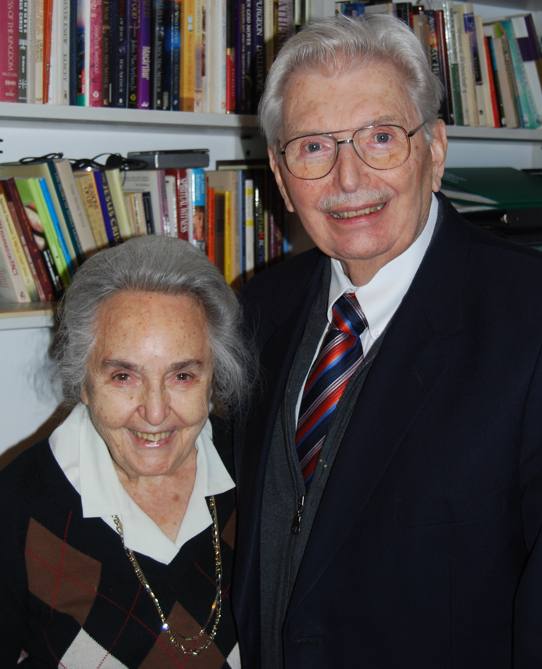
Bill and Maria Teresa Standridge- Serving the Lord together for over 56 years in Italy!
I know that after my departure Bill will feel a bit as though he was “mutilated”, but I know that his love for the Lord, His Word, and the Italians, will support him and help him serve as long as he has the strength.
Of course I do not like, either, the idea of leaving our four children, three daughters-in-law and also a son-in-law, who love me and twelve grandchildren (one married) and two great-grandchildren, each one more lovely than the other. But the moment of separation will come.
But my joy is that all have trusted the Lord as their Savior and are therefore in his hands.
But now, let’s talk about the reasons for my peace of mind.
I came to know Jesus as Savior and Lord when I was 20 years old. Since then, the grace of God has surrounded me and the unmerited favor of the Lord has wrapped and protected me.
I know I’m saved, and my faith is based on the promises of God’s Word. One that comforts me in particular is the letter of the Apostle Paul to Titus: “He saved us, not because of works done by us in righteousness, but according to his own mercy, by the washing of regeneration and renewal of the Holy Spirit, whom he poured out on us richly through Jesus Christ our Savior, so that being justified by his grace we might become heirs according to the hope of eternal life.” (Titus 3:5-7) What more than that could you want or hope for?
Then I had the honor to receive from the Lord a clear call to serve full-time, I went to Bible school, I had teachers of great value, I have experienced the extraordinary time of evangelistic fervor and spiritual growth in Italy after the end of World War II. I was a part of the beginning of the new period of political freedom in Italy that gave us permission to start youth camps, summer schools, conferences and all kinds of activities that the Lord has blessed. I threw myself headlong into every new evangelistic project.
My university studies prepared me to have a ministry of writing and my heart led me to make available to the Lord every capacity that He had given me.
Over the years I learned to study and nourish myself in the Word of God, I understood the importance of furthering knowledge in His truth, and rooted my faith in obedience to what it says. Without a good supply of this type of knowledge, the Christian life can become very severe and be very flat.
I confess also that I have made many mistakes for which I had to ask forgiveness from the Lord, from my loved ones, brothers and sisters, and I realized that forgiveness is the key to the Christian life. It is essential in both the human family and that of God.
He who does not forgive others has understood little of the love of God, but those who practice the confession of their sins to God and asking for the pardon of all they have offended, know that the blood of Christ purifies them and allows them to walk in the light (1 John 1:8-10).
After so many years of walking with the Lord, I realized that “in me, in my flesh, Maria Teresa, dwelleth no good thing” (Romans 7:18), but whatever I did that is good is what he has done for me and in me (Isaiah 26:12).
During a conference in Isola del Gran Sasso, Daniel, one of our sons, in a meditation stressed the fact that after the resurrection, Jesus bore in his body the marks of his suffering and death for us. The disciples have seen his scars and know that, with his resurrected human body, Jesus ascended to heaven.
In the vision of Revelation, John later saw Him as a “lamb, standing, which seemed to have been sacrificed” (5:6) and I, with myriads of believers (and hopefully with you) will behold for all eternity those signs of the price paid by Jesus for our salvation. Those signs will inspire us to worship Him in perfection.
This wonderful thought humbles me, but also fills me with great gratitude.
With love, Maria Teresa Rome, March 2013
The Presidential Inauguration, 2009 (Photo by the Sun-Sentinal)
I have never enjoyed being in the midst of a crowd. I like to have a bit of space. However, crowds are a fact of life. I have been a part of a crowd at churches, athletic events, airports, the streets of New York City, on a crowded expressway in Chicago, or a crammed subway in Lisbon. Crowds can make us lose our individuality. We seem to merge into the crowd as an unknown and unimportant face.
You can see this at an athletic event when somebody begins the wave. What do we do? We conform and stand up and wave our arms when it is our turn. Also, I have noticed this when you see a subway train pass the opposite direction, the people look like one massive block of humanity. The crowd seems to swallow up each person.
This crowd mentality has also filtered itself into our Christian faith. We want to belong to a large group. We want to follow the new trend in Christianity. If the crowd says, we dress a certain way to church, then we dress that way. If the crowd says a certain kind of music is better for today, then we follow the crowd. If the latest Christian celebrity makes a pronouncement, then we follow his words like the rest of the crowd.
Churches are looking for a crowd. They want to emulate the mega church that is in their city or on the television. A crowd equals success in the eyes of men. The church can easily lose sight of God and His working in the lives of individual people. The danger of this crowd mentality is that we can use people to build our ministries, instead of using our ministry to build people.
The Bible often shows the danger of the crowd. Joseph’s brothers were gathered together as their brother, Joseph approached. None of these brothers alone would have thought about killing him, but together they came up with their evil plan. Nobody was willing to speak out openly against the plan of the crowd. The crowd can make us commit evil deeds which we would not do alone.
When the nation of Israel was at the border of the Promised Land, the twelve spies had returned with their report of the land. The crowd said that it was too difficult and the people became disheartened. There were only three people who were willing to stand against the crowd, Caleb, Joshua and Moses. They were nearly killed for their courageous stand. The crowd can make a coward of us all.
In the time of Elijah, the crowd worshipped the false gods of the surrounding nations. The crowd had rejected the True God. Elijah went against this crowd in his great contest against the prophets of Baal. The majority said that Baal was god. They were proven false by the God of Elijah. The crowd can cause us to turn our backs on the true God, to follow their false gods of materialism, fame, pleasure, and self-centeredness.
When Jesus walked on the earth, he would often attract a crowd, but the crowds were very superficial in their dedication to Jesus. After Jesus feeds the five thousand, he teaches the people about His deity. As a result. the crowd walks away because their faith was based upon what they could get out of Jesus. The crowd can cause our faith to become quite superficial, because we no longer see the need to develop a personal walk with the Lord. Whatever our “crowd” says is what we believe. We become sheep following other sheep, instead of sheep following the Shepherd.
Jesus also warns us about the danger of the crowd when He says: “Enter ye in at the strait gate: for wide is the gate, and broad is the way, that leadeth to destruction, and many there be which go in thereat: Because strait is the gate, and narrow is the way, which leadeth unto life, and few there be that find it.” (Matthew 7:13-14) The crowd has the idea that everybody is going to heaven. We can live as we please. The crowd has led many people to Hell because of their false notion of universal salvation.
Jesus walked upon this earth amidst many crowds, but he didn’t develop a crowd mentality. He kept His focus upon His Heavenly Father. If we are to fight the crowd mentality, we need to keep our eyes upon the Lord Jesus Christ. “Looking unto Jesus the author and finisher of our faith; who for the joy that was set before him endured the cross, despising the shame, and is set down at the right hand of the throne of God.” (Hebrews 12:3)
“Dear Lord, I feel pressure to conform to the crowd. This is not only the crowd of the world which would turn me from my faith, but also the crowd within Christianity. This crowd would have me to conform to the latest trends and the latest pronouncements of some Christian celebrity. Lord, I need you. Help me to keep my focus upon you. Help me to walk with you and not worry about what others are doing or saying. Thank you for calling each of your sheep by name. Thank you that I can have a personal walk with you. Amen”
Hurt and discouragement are realities in every person’s life. We have felt the painful arrow of someone’s words. We have experienced being misunderstood or betrayed. Discouragement settles into our lives as an unwelcomed guest. Even our friends can do nothing to relieve us of our painful hearts. We don’t know where to turn.
King David had these very same experiences in his life. He had enemies who were out to get him. His few remaining friends pushed him into a deeper despair by saying that God had abandoned him. He shares his experience in Psalm 3. This Psalm begins with David expressing the helplessness of his soul: “Lord, how are they increased that trouble me! many are they that rise up against me. Many there be which say of my soul, There is no help for him in God. Selah.” (Psalm 3:1-2)
The words: “There is no help for him in God.” cry out for an answer. We have all faced discouragement because of circumstances, people who don’t like us, and our own actions. However, when those who are closest to us give up hope for us, what are we to do? We often crawl into our shell and nurse our broken heart alone.
In the midst of the darkness of his soul, David looks up to God. Has God abandoned him? No! He finds his hope and encouragement once again in God. He reaffirms his faith and trust in God: “But thou, O Lord, art a shield for me; my glory, and the lifter up of mine head.” (Psalm 3:3)
God is his protector (shield) in spite of his enemies.
God will be glorified, in spite of his circumstances.
God will lift up his soul unto joy and encouragement in spite of his despair.
After David reaffirms his trust in God, he then cries out for God to act in his behalf. “I cried unto the Lord with my voice, and he heard me out of his holy hill. Selah” (Psalm 3:4) God is waiting for us to cry out to Him. Our Heavenly Father knows all about our enemies, pain, trials, and discouragement; however, He chooses to wait until we humble ourselves before Him. Our crying out to Him is saying: “Lord, I have no where else to turn. I desperately need you. Please come and deliver me.” God will hear our cry and respond.
David’s situation has yet to change, but he has changed. He knows that God is working everything for His glory. David no longer faces sleepless nights turning his bed. “I laid me down and slept; I awaked; for the Lord sustained me.” (Psalm 3:5) We don’t have to lie awake at night worrying about our enemies, future and tribulations. Sleep comes when we remember that the Lord is our shield. Nothing can enter our lives that doesn’t first pass through his loving presence.
The dread of each day would no longer be a part of David’s life. “I will not be afraid of ten thousands of people, that have set themselves against me round about.” (Psalm 3:6) We don’t have to wake up in the morning filled with fear of what will happen. God is in control. He is the One who restores our confidence and hope. Each day is a new opportunity to bring glory to God who has lifted up our soul
David concludes with confidence that God will show His justice upon his enemies. “Arise, O Lord; save me, O my God: for thou hast smitten all mine enemies upon the cheek bone;thou hast broken the teeth of the ungodly.” (Psalm 3:7) When we turn to God, we are free to allow Him to deal with those who have committed evil, whether it be against us, or others. We are free from bitterness when we commit them completely to the justice of God.
Turning to God has caused a transformation in David’s life. In the beginning of the Psalm, David’s soul is downcast and hopeless, but at the end of the Psalm, he proclaims that he is greatly blessed by God. “Salvation belongeth unto the Lord: thy blessing is upon thy people. Selah.” (Psalm 3:8)
God transforms our despair into joy, peace, comfort, courage and blessing. God’s ears are always open to our cry. Are we ready to cry out to Him?
“Dear Lord, I have a heavy heart. My life seems hopeless. Those around me say that I am beyond your help. Yet, I know that you hear my cry unto you. Your Word tells me that you are my Protector. Help me to hide behind your shield. Give me the grace to live for your glory. Thank you for lifting up my soul no matter how low it may go. You alone can restore my hope, my joy, my courage, and my purpose in life. Thank you for hearing not only my cry, but the deepest sighs of my soul that I can’t express outwardly. Amen.”
“Therefore, my beloved brethren, be ye stedfast, unmoveable, always abounding in the work of the Lord, forasmuch as ye know that your labour is not in vain in the Lord.”
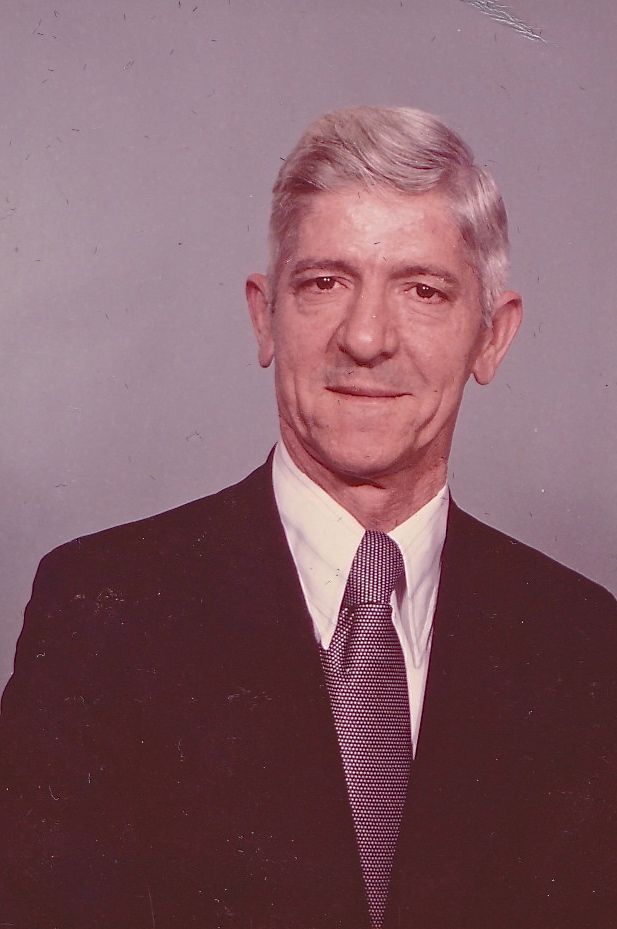
(1 Corinthians 15:58) Every time I read this verse, I can’t help but think of my Father-in-Law, Perry Mayton. He lived out this verse in his daily life before his family, and every person who knew him.
Perry Mayton was born January 3, 1919 in the small city of Harriman, Tennessee. God was preparing Perry’s heart to serve Him through two tragic events in his childhood. His dad died when he was six years old and his mom died when he was a teen. These tragic events would help give Perry a compassionate heart as he ministered to people throughout his life.
Harriman was a city filled with gospel preaching churches. As a result, Perry accepted the Lord as his Savior during his teenage years. For a few years he didn’t grow in his faith, but God was preparing him for future ministry. After leaving the army, Perry began working in one of the mills in Harriman. During that time, he met his future bride Iva Olmstead. In 1948, they married. Soon after the wedding, Perry believed that the Lord had called him into the ministry. He demonstrated this calling by his faithfulness in serving the Lord for over fifty years.
There are several things that stand out in Perry’s life and ministry. One thing that always impressed me was his tireless service for the Lord. During most of the years of his ministry, Perry also had to work a day job. This meant that he would work all day and then take on the demands of a pastor during the evening and Sunday. I never heard him complain because he found great joy and peace in serving the Lord.
I was also impressed with Perry’s knowledge of the Word of God. He never had much formal Bible training, but he knew the Word of God. He understood the doctrines of the Bible as well as any person who had formal training. He loved to study His Bible. His passion for God’s Word is expressed by the Psalmist in Psalm 119:16: “I will delight myself in thy statutes: I will not forget thy word.”
Perry also had a compassionate heart towards others. He showed concern for any person in need. He had a special compassion for the lost. A few times, I would go with Perry when he did his weekly radio broadcast. His passion for the lost was clearly seen as he would plead for the lost to repent of their sin and turn to the Lord as their Savior. He had the unique gift of having both the heart of an evangelist and a pastor.
The fourth thing that impressed me about Perry was his great spirit of humility before God and others. I never heard him talk about any of his accomplishments. He did God’s work and didn’t think about the praise of men. He sought to please God alone. This humility was obvious to any person who had Perry as their pastor.
The greatest impact that Perry had upon my life was through his daughter, Sharon. Perry did a great job of preparing his daughter for being a wife and mother. Sharon understands to this day what it means to minister in a local church. Her father also taught her how to love the Word of God and minister to people with a heart of compassion.
Our Wedding (June 22, 1979)
Perry was quite well-known in the Harriman area because he had been the pastor of several local churches. I never heard anybody say a bad thing about “Brother Perry”. He was beloved by the people in his churches and he loved them. He would continue to minister via the radio and preaching in churches until his health kept him from doing what he always loved.
On September 1, 2003, Perry would enter into the presence of His Savior. The funeral visitation was a great testimony to his over fifty years of ministry. The line to greet Perry’s widow, Iva, went outside of the doors of the funeral home. Many people told us how God had used Perry in their lives. The outpouring of love was a testimony to Perry’s faithfulness in his service to the Lord.
Yes, Perry is missed by his family, friends and many of those to whom he ministered; however, his testimony lives on in the lives of many people. The words of Matthew 25:23 apply to the life of Perry Mayton. “His lord said unto him, Well done, good and faithful servant;” Perry has finished his labors here on earth, but his legacy lives on through his family and many others who were blessed by his ministry.
Merry Christmas to all of you who subscribe to my blog or read my posts. May each of you enjoy this special time of year with family and loved ones. This Christmas for me is very special. Sharon and I are glad to have our whole family with us for three days.
As we think about this time of year we can’t forget the birth of our Savior, the Lord Jesus Christ. Here are three thoughts that I pray would be a blessing to those who read them.
1. Do not fear God’s plan for your life. Embrace it! God does know what He is doing. “And the angel said unto her, Fear not, Mary: for thou hast found favour with God.” (Luke 1:30)
2. Do not ever limit what God can do with your life. What may seem insignificant to man is very significant to God. “But thou, Bethlehem Ephratah, though thou be little among the thousands of Judah, yet out of thee shall he come forth unto me that is to be ruler in Israel; whose goings forth have been from of old, from everlasting.” (Micah 5:2) In the birth of Jesus, God used 1) an insignificant young woman (Mary) 2) an insignificant object (a manger) 3)an insignificant city (Bethlehem) 4) an insignificant nation (Israel). God wants to use each of us “insignificant” people for His purposes and His Glory. Can we say: “Here, am I Lord, use me.”?
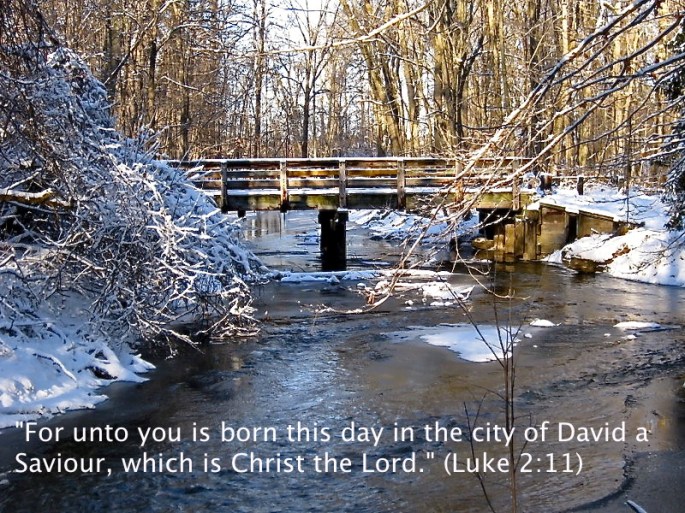
3. Do we know the One who was born in Bethlehem two thousand years ago? “For unto you is born this day in the city of David a Saviour, which is Christ the Lord.” (Luke 2:11)
1. He is the fulfillment of Old Testament Prophecy.
2. He is the coming King.
3. He is the Savior of the World
4. He is the Messiah (the Deliverer)
5. He is the Lord.
6. He is God in the flesh.
“Dear Lord
Help me to see beyond the lights of Christmas and see you, the Light of the World.
Help me to see beyond the gifts of Christmas and see you, the Gift from God the Father.
Help me to see beyond the food of Christmas and see you, the Bread of Life.
Help me to see beyond the activity of Christmas and see you, the Rest for my Soul. Amen”
Rogue River Trail-Rockford, MI (Photo by: Mark J Booth)
The Christian life encounters many pitfalls. One unsuspecting pitfall is that we lose the joy of being a Christian. We become lukewarm in our relationship with Christ. Prayer is routine. Bible study is a chore. Our worship has become cold and formal. What has happened to our lives?
There was a church in the New Testament that had these same problems. Jesus spoke these words to the church at Laodicea: “I know thy works, that thou art neither cold nor hot: I would thou wert cold or hot. So then because thou art lukewarm, and neither cold nor hot, I will spue thee out of my mouth.”(Revelation 3:15-16) This church was religious, but they no longer enjoyed Christ’s presence. They had lost a vibrant relationship with their living Lord.
What was Christ’s answer to their problem? “Behold, I stand at the door, and knock: if any man hear my voice, and open the door, I will come in to him, and will sup with him, and he with me.” (Revelation 3:20) Christ was telling the church that they were leaving Him out of their lives. He politely was knocking on the door of their hearts; so that they would once again enjoy having fellowship with Him.
Chateau-Abbadia (Southwestern France) Photo by: Mark J Booth
A meal in Bible times was a time-consuming event where people enjoyed talking and listening to one another. Jesus longs for this kind of communion with us. Have we opened the door? Christ has prepared a meal for us with His presence and blessings. Have we sat down and taken the time to enjoy His presence? He is waiting.
When we take the time to enjoy Christ’s presence, we will view life and our circumstances from a totally different perspective. We will see life as God sees life. We will see our problems as God sees our problems. God has prepared a banquet for us. Here is what He offers to us as take time to enjoy His presence.
1. We have guidance in our life. “O send out thy light and thy truth: let them lead me;” (Psalm 43:3a) The question is often asked: “How can I know the will of God?”To understand the will of God means more than following a formula, but we follow the Lord. As we commune with the Lord, we will discover what pleases Him and what doesn’t please Him. God’s greatest priority for our lives is that we know Him. His light and truth will guide us.
2. We enjoy true worship of God. “let them bring me unto thy holy hill, and to thy tabernacles.” (Psalm 43:3b) The Psalmist in the midst of all that was happening in his life saw the importance of worshiping God.Worship is not to please ourselves, but to please our Lord. He desires worship because He is worthy of our worship. Our worship is bringing glory to God in all that we say and do. When we worship God, we recognize His presence and majesty.
3. We have joy in spite of the circumstances in our life. “Then will I go unto the altar of God, unto God my exceeding joy:” (Psalm 43:4a) The Psalmist faced many trials in his life which caused him to become to discouraged and depressed. He understood that in God’s presence there is great joy. No matter what is happening in our lives, if we remember that God is with us, we can experience a joy that is not based upon circumstances, but based upon a relationship.
4. We have an attitude of praise. “yea, upon the harp will I praise thee, O God my God.” (Psalm 43:4b) We often give praise for the blessings that we receive from God, but what about giving praise to the giver of those blessings. When we enjoy God’s presence, we will focus upon all that God is. We will praise HIm for His attributes and titles. Every day, we should take the time to praise God for all that He is and does.
5. We have a contented spirit. “They shall be abundantly satisfied with the fatness of thy house; and thou shalt make them drink of the river of thy pleasures.” (Psalm 36:8) A lack of contentment is a warning sign that we are not enjoying God’s presence. When we are walking with God, we will be totally content. When we are close to the Lord, everything else will fall in place.
6. We receive comfort from God. “I will fear no evil: for thou art with me; thy rod and thy staff they comfort me.” (Psalm 23:4) Comfort is not based on circumstances, but upon our relationship with our Living God. His rod shows his protection against our enemies. His staff shows His guidance and help in our lives. When we have His protection and guidance, we are sure of His comfort and love even in the most trying times.
Enjoying God’s presence begins with salvation, but it continues for all eternity. We enjoy His presence as we listen to him, communicate with Him, meditate upon Him and pour out our heart unto Him. Are enjoying His presence today?
“Dear Lord, my life often becomes filled with the routine. I have lost the joy of being Christian. I haven’t taken the time or effort to enjoy your presence. Thank you for knocking on the door of my heart. Thank you for your desire to fellowship with me. I now open up the door of my heart to you. Please come in! I know that the greatest joy in life comes from being in your presence. Amen.”
This evening many of us will be watching the big debate between President Obama and Governor Romney. We will be pulling for our favorite candidate in the debate. In the end, we will probably conclude that our candidate has won.
Debating has been around since the fall of man. When Adam and Eve fell in sin, they debated God by blaming Him for their sin. Moses debated with God when He had called Moses to go to Egypt. Peter debated with the Lord Jesus when Peter told Jesus that he wasn’t suppose to die on the cross. Satan also debated with God when he discussed Job’s life. We also have had our debates with God. We have questioned God about various areas in our lives. Here are a few of our debate questions for God and His answers.
1. Why did you give me the family you gave me? God answers: “I will praise thee; for I am fearfully and wonderfully made: marvellous are thy works; and that my soul knoweth right well.” (Psalm 139:14)
2. Why did you allow this tragedy in my life? God answers: “And we know that all things work together for good to them that love God, to them who are the called according to his purpose.” (Romans 8:28)
3. Why don’t you get rid of this problem in my life? God answers: “And he said unto me, My grace is sufficient for thee: for my strength is made perfect in weakness. Most gladly therefore will I rather glory in my infirmities, that the power of Christ may rest upon me.”
(2 Corinthians 12:9)
4. I don’t understand what you are doing in my life. Can you tell me? God answers: “For my thoughts are not your thoughts, neither are your ways my ways, saith the LORD. For as the heavens are higher than the earth, so are my ways higher than your ways, and my thoughts than your thoughts.” (Isaiah 55:8, 9)
5. How should I respond to those who have hurt me? God answers: “But I say unto you, Love your enemies, bless them that curse you, do good to them that hate you, and pray for them which despitefully use you, and persecute you;” (Matthew 5:44)
6. Have you really forgiven me of my sin? I still feel guilty! God answers: “He hath not dealt with us after our sins; nor rewarded us according to our iniquities. For as the heaven is high above the earth, so great is his mercy toward them that fear him. As far as the east is from the west, so far hath he removed our transgressions from us” (Psalm 103:10-12)
7. Why aren’t you answering my prayer? God answers: “I waited patiently for the LORD; and he inclined unto me, and heard my cry.” (Psalm 40:1)
8. Where can I find satisfaction in my life? God answers: “For he satisfieth the longing soul, and filleth the hungry soul with goodness.” (Psalm 107:9)
God always has the right answer for each of our questions. Don’t be afraid to take your own questions to God. He is always ready to answer them. By the way, He doesn’t need any prep time!







 Bible Treasures for Today