Jesus is Knocking. Will I Answer? (Enjoying the Presence of God)

Rogue River Trail-Rockford, MI (Photo by: Mark J Booth)

The Christian life encounters many pitfalls. One unsuspecting pitfall is that we lose the joy of being a Christian.  We become lukewarm in our relationship with Christ.   Prayer is routine.  Bible study is a chore.  Our worship has become cold and formal. What has happened to our lives?

There was a church in the New Testament that had these same problems.  Jesus spoke these words to the church at Laodicea: “I know thy works, that thou art neither cold nor hot: I would thou wert cold or hot.  So then because thou art lukewarm, and neither cold nor hot, I will spue thee out of my mouth.”(Revelation 3:15-16)  This church was religious, but they no longer enjoyed Christ’s presence. They had lost a vibrant relationship with their living Lord.

What was Christ’s answer to their problem? “Behold, I stand at the door, and knock: if any man hear my voice, and open the door, I will come in to him, and will sup with him, and he with me.” (Revelation 3:20) Christ was telling the church that they were leaving Him out of their lives.  He politely was knocking on the door of their hearts; so that they would once again enjoy having fellowship with Him.

Chateau-Abbadia (Southwestern France)Photo by: Mark J Booth
Chateau-Abbadia (Southwestern France)
Photo by: Mark J Booth

 A meal in Bible times was a time-consuming event where people enjoyed talking and listening to one another.  Jesus longs for this kind of communion with us.  Have we opened the door?  Christ has prepared a meal for us with His presence and blessings. Have we sat down and taken the time to enjoy His presence?  He is waiting. 

When we take the time to enjoy Christ’s presence, we will view life and our circumstances from a totally different perspective.  We will see life as God sees life.  We will see our problems as God sees our problems.  God has prepared a banquet for us. Here is what He offers to us as take time to enjoy His presence.

1. We have guidance in our life.  “O send out thy light and thy truth: let them lead me;” (Psalm 43:3a) The question is often asked: “How can I know the will of God?”  To understand the will of God means more than following a formula, but we follow the Lord.  As we commune with the Lord, we will discover what pleases Him and what doesn’t please Him.  God’s greatest priority for our lives is that we know Him.  His light and truth will guide us. 

2. We enjoy true worship of God. “let them bring me unto thy holy hill, and to thy tabernacles.” (Psalm 43:3b) The Psalmist in the midst of all that was happening in his life saw the importance of worshiping God. Worship is not to please ourselves, but to please our Lord.  He desires worship because He is worthy of our worship.  Our worship is bringing glory to God in all that we say and do.  When we worship God, we recognize His presence and majesty.  

3. We have joy in spite of the circumstances in our life.  “Then will I go unto the altar of God, unto God my exceeding joy:” (Psalm 43:4a) The Psalmist faced many trials in his life which caused him to become to discouraged and depressed.  He understood that in God’s presence there is great joy.  No matter what is happening in our lives, if we remember that God is with us, we can experience a joy that is not based upon circumstances, but based upon a relationship.

4. We have an attitude of praise.  “yea, upon the harp will I praise thee, O God my God.” (Psalm 43:4b)  We often give praise for the blessings that we receive from God, but what about giving praise to the giver of those blessings.  When we enjoy God’s presence, we will focus upon all that God is.  We will praise HIm for His attributes and titles.  Every day, we should take the time to praise God for all that He is and does.

5. We have a contented spirit.  They shall be abundantly satisfied with the fatness of thy house; and thou shalt make them drink of the river of thy pleasures.” (Psalm 36:8)  A lack of contentment is a warning sign that we are not enjoying God’s presence.  When we are walking with God, we will be totally content. When we are close to the Lord, everything else will fall in place. 

6. We receive comfort from God. I will fear no evil: for thou art with me; thy rod and thy staff they comfort me.” (Psalm 23:4) Comfort is not based on circumstances, but upon our relationship with our Living God.  His rod shows his protection against our enemies.  His staff shows His guidance and help in our lives.  When we have His protection and guidance, we are sure of His comfort and love even in the most trying times. 

Enjoying God’s presence begins with salvation, but it continues for all eternity.  We enjoy His presence as we listen to him, communicate with Him, meditate upon Him and pour out our heart unto Him.  Are enjoying His presence today?

“Dear Lord, my life often becomes filled with the routine.  I have lost the joy of being Christian. I haven’t taken the time or effort to enjoy your presence.  Thank you for knocking on the door of my heart.  Thank you for your desire to fellowship with me.  I now open up the door of my heart to you.  Please come in!  I know that the greatest joy in life comes from being in your presence.  Amen.”

Have I Forgotten Him?

The Canadian Rockies-Photo By: Mark J. Booth

During this time of year, everybody is busy.  Maybe, we are too busy.  We can easily forget Jesus Christ in all that we are doing.  Jesus longs to keep us close to Himself.  He longs to walk with us daily.  We get busy with family, friends, work, and even church and we can quickly forget Jesus Christ.

  • I look for salvation, but I forget the Savior.
  • I look for comfort, but I forget the Comforter
  • I look for blessings, but I forget the One who Blesses.
  • I look for promises, but I forget the Promised One
  • I look for guidance, but I forget the Guide.
  • I look for provision, but I forget the Provider
  • I look for protection, but I forget the Protector
  • I look for love, but I forget the Lover of My Soul.
  • I look for strength, but I forget the All-Powerful One.
  • I look for peace, but I forget the Giver of Peace.

The early church also had a tendency to forget the Lord Jesus Christ.   The Book of Revelation was written to seven churches.  Five of these churches showed some definite signs of forgetting Jesus.  Here is a verse that can refocus our thoughts and affections upon Our Lord Jesus Christ.  “And from Jesus Christ, who is the faithful witness, and the first begotten of the dead, and the prince of the kings of the earth. Unto him that loved us, and washed us from our sins in his own blood.” (Revelation 1:5)

1. Jesus Christ is Our Deliverer.  “And from Jesus Christ”  The name “Christ” is the word “Messiah” in Greek.  This word has the idea of deliverer.  Jesus came to deliver us from sin, death, and the devil.  We no longer have to live under the penalty and dominion of sin because we have a new life in Jesus Christ.  We have new life in order to pursue a close love relationship with Jesus Christ.

2. Jesus Christ is our Faithful Witness.  “who is the faithful witness”. Jesus came to earth primarily to die on the cross for our sin; however, He also came to teach us the truth.  Through Him, we learn the truth about God, ourselves, the future, the way of salvation, and many other important subjects.  Our relationship with Christ enables us to see God and life more clearly.

3. Jesus Christ is the Conqueror of Death. “the first begotten of the dead”.   As a pastor, I have done many funerals.  These funerals are sad occasions; yet because of Christ’s resurrection, we know that there is hope.  Death, for the believer in Christ, is the doorway to the presence of the Lord and Heaven.  We don’t need to fear death when we walk with the One who conquered death.  

The Garden Tomb-Jerusalem: Photo by Mark J. Booth

4. Jesus Christ is Sovereign.  “the prince of the kings of the earth.” Jesus is greater than  any earthly ruler.  No matter what happens in our nation, we know that Jesus is ultimately in control.  One day, Jesus Christ will return to earth to reign over all those who have believed upon Him.  The whole Book of Revelation is about the events before and after His coming.   No matter what happens in our lives, we can remember that Jesus is ultimately in control.

5. Jesus Christ is the Source of Love.  “Unto Him that loved us,”  We don’t deserve His love; yet He loves us.  The more we know Him, the more we will understand His love and the ways of His love.  When we are full of anxiety, fear, discontentment and discouragement, these are signs that we have forgotten Jesus Christ and His great love for us. 

6. Jesus Christ is the Savior of the World.  “And washed us from our sins in his own blood.”  As the song writer wrote: “Nothing can wash away my sins, but the blood of Jesus.”  Jesus took our place on the cross.  His love is a love of action.  He not only tells us that He loves us, but He showed His love by dying on the cross for our sins.  He alone saves us from our sin. “I am the way, the truth and the life: no man comes unto the Father, but by me.” (John 14:6)

Many in the early church were religious, but they had forgotten Jesus Christ.  Have we forgotten Him?  Have we forgotten all that He is and has done?  “Turn your eyes upon Jesus, look full in his wonderful face and the things of the earth will grow strangely dim in the light of His glory and grace.”

“Dear Lord, I have the tendency to forget you amidst all that goes in my life.  I may seek what you can give me, but I forget you.  Help me, to seek you above all else.  Thank you for all that you are and all that you have done. Amen”

Aubrey Oberlin: In the Everlasting Arms

Aubrey Joy Oberlin

What can you learn from a six-week old baby?  I would have never thought about this question until I met Aubrey Joy Oberlin.   I met her for the first time a bit over two years ago. when I heard about her plight. She was born with a genetic disease called Junctional EB (Epidermolysis bullosa).  This disease was painful as it affected all parts of her body.   Her parents, family and friends did a great job of loving her and taking care of her for her six short weeks of life.  Aubrey’s life on this earth ended on November 17, 2010. However, she is far from being forgotten.

1. The first lesson that I learned from Aubrey is contentment. When I visited Aubrey, she always had her eyes opened.   I knew she had trouble breathing and she was in pain, but in all my visits I never detected a complaining or angry spirit. Her eyes were saying: “Could you please help me. I don’t feel well.”   Her eyes convicted me of how easily I complain when things don’t go my way.  Though she didn’t say it with words, her eyes showed me a form of contentment that I need to experience more often in my life.  “Not that I speak in respect of want: for I have learned, in whatsoever state I am, therewith to be content.  I know both how to be abased, and I know how to abound: every where and in all things I am instructed both to be full and to be hungry, both to abound and to suffer need.” (Philippians 4:11-12)

2. A second lesson that I learned from Aubrey is my need of dependence upon God.  “I just want to hold her one last time.  Aubrey loves to be held!”  As I heard these words from Aubrey’s grandma the day of Aubrey’s entrance into God presence, I couldn’t help but feel sorrow and compassion for a dear family who would never again be able to hold their beloved daughter in their arms.  It also brought to remembrance a verse in the Bible that has brought comfort to many people: “The eternal God is thy refuge, and underneath are the everlasting arms:” (Deuteronomy 33:27)

Aubrey’s loved ones had a great desire to hold her in their arms and show their great love for her.   Likewise, Our Heavenly Father loves us and longs to keep us close unto Himself.   His arms are all-powerful arms, yet His arms are also tender.  His arms bring great comfort and protection through whatever trials and pains that we face. His arms will never tire in holding us.

Aubrey did love to be held in the arms of those who loved her.  She felt the love and comfort from those loving arms.  As I thought about this,  I realized that at times I haven’t longed to be held by Our Heavenly Father.  I choose to go my own way.   Yes, His arms are reaching out for me, yet I often resist those loving arms.   May I learn to rest assured in the arms of Our Loving Heavenly Father, even as Aubrey rested so comfortably in the arms of those who love her.

3. A third lesson that I learned from Aubrey is priority.  Being with Aubrey during her last day on earth was very difficult.  She would labor to breathe.   This went on throughout the day until finally later in the evening her heart stopped beating.  Aubrey showed me that truly I need to remember to place the things of God first in my life.  Life is brief.  Every day is a gift from God. Will I live each day for God’s purpose and His Glory?  If ye then be risen with Christ, seek those things which are above, where Christ sitteth on the right hand of God.  Set your affection on things above, not on things on the earth.” (Colossians 3:1-2)

4. A fourth lesson that I learned from Aubrey is gratefulness for God’s salvation.   As I would speak to Aubrey’s loved ones, I was glad that I could share Bible verses about Christ’s love for the world and how he died on the cross for our sins. Aubrey never had an opportunity to believe (because of her age), but the Bible does make it clear that she is present with the Lord.  David expected to see his baby in heaven.   “Then said his servants unto him, What thing is this that thou hast done? thou didst fast and weep for the child, while it was alive; but when the child was dead, thou didst rise and eat bread. And he said, While the child was yet alive, I fasted and wept: for I said, Who can tell whether GOD will be gracious to me, that the child may live?  But now he is dead, wherefore should I fast? can I bring him back again? I shall go to him, but he shall not return to me.” (2 Samuel 12: 21-23)

Two years ago, we said goodbye to Aubrey.  She is now in God’s presence.  I can’t always understand the ways of God, but I am thankful that I had the opportunity to get to know Aubrey.  She was an excellent teacher while she was with us!

P.S. For further information on Epidermolysis bullosa please see: http://www.debra.org

Imagine….Being with Jesus

The Garden of Gethsemane-photo by: Mark J. Booth

Imagine…being with Jesus!  What would my life be like, if I had walked with Jesus two thousand years ago? Yesterday, I read 1 John 1:1: “That which was from the beginning, which we have heard, which we have seen with our eyes, which we have looked upon, and our hands have handled, of the Word of life;” As I read this verse, I had the desire to place myself in the Apostle John’s sandals.  I imagined walking and living with the Savior during His time upon the earth.

“Which we have heard.”  Imagine the things that John heard as he walked with Jesus.  He heard the Sermon on the Mount, the Parables, Christ’s teachings about His Second Coming, and the Upper Room Discourse.  Can you imagine what it was like to hear Jesus praying.  As John travelled with Jesus, he probably heard Jesus talk about His Father, His creation, history and many other topics.  John never lost the wonder of listening to Jesus.  What about me? Have I lost the wonder of listening to Jesus?  Am I eager to listen to the His words in scripture.

Which we have seen with our eyes.”  Imagine the things that John saw as he walked with Jesus.  He saw the feeding of the five thousand, the calming of the storm, many healings, the resurrection of Lazarus, and many other miracles.  He would have also seen Jesus embracing the little children, and showing love to the outcasts.  What about me?  Have I lost the wonder of the works of Christ.  Am I able to imagine seeing those wondrous deeds of Jesus that John saw?

“Which we have looked upon”.  Imagine joining John and looking upon Jesus on the cross.  John saw the suffering, the ridicule, the crying out from the cross, the words of encouragement to the one thief.  Then three days later, he would behold this same Jesus, who had conquered death.  John witnessed the most important act in human history. Jesus died for the sins of the world. His life would be forever changed.  What about me?  Have I lost the wonder that God, the Son, came to earth and died on the cross for me?  Have I lost the wonder of the resurrection of Christ?  Have I lost the wonder of the greatness of my salvation?

“Our hands have handled, of the Word of life.” Imagine John leaning on the Lord’s breast during the last supper.  Imagine the embraces that Jesus gave John during their time together.  Imagine Jesus holding John up with his hand as John stumbles while walking.  What about me?  Have I lost the wonder of the fact that Jesus touches my life in many ways, whether through His Word, through His Holy Spirit, or through other believers?  Am I looking forward to one day when Jesus will embrace me in heaven?

“Lord, thank you for these words of the Apostle John.  You used them to help me see that I often lose the wonder of all that you have done, said, and promised.  Teach me, to imagine being with you as John was with you.  Help me not to read the gospels as a disinterested bystander, but as one who is walking with you.  Amen”

A Heart to Walk with God

Sleepy Hollow State Park-Michigan USA-Photo by: Mark J. Booth

Imagine taking a walk with God. One of the most unusual people in the Bible is Enoch.  He is one of two Old Testament characters who never died.  What is it that makes Enoch unique?  The Bible says:  “And Enoch walked with God: and he was not; for God took him.” (Genesis 5:24)  Enoch loved listening to God.  He enjoyed sharing his heart with God. He made his relationship with God the number one priority in his life.  Enoch’s walk with God meant that he had an intimate relationship with God.

We often find ourselves too busy to take time to walk with God.  Our culture focuses on  instant gratification.  We don’t like to slow down.  We have fast food, fast cars, instant photos, instant communication and microwave ovens.  We think that we can also have a microwave relationship with God.  We  read a few verses, and say a quick prayer and think that we have a close relationship with God.  We have lost the joy and the benefit of slowing down and learning to walk with God.

How can we develop a heart that longs to walk with God?  Here are five ways that we can cultivate a heart that desires to walk with God.

1. We need to develop a heart that agrees with God.  Agreeing with God enables us to view our life from His perspective.  We enjoy our time with God because we aren’t arguing with Him. We are learning from Him.  The nation of Israel had a problem of agreeing with God.  They wanted to go their own way.  The prophet Amos said: “Can two walk together, except they be agreed?” (Amos 3:3) Do we agree with God concerning our goals, our future, our family, our time, our money and other areas of our lives? We can’t walk in our own way and walk with God at the same time. 

2. We need to develop a heart that is humble before God.  Pride causes us to think that we don’t need to walk with God.  We are able to handle our life without God.  The prophet Micah says:  “He hath shewed thee, O man, what is good; and what doth the LORD require of thee, but to do justly, and to love mercy, and to walk humbly with thy God?(Micah 6:8) A humble spirit is a dependent spirit.  A dependent believer sees their great need to walk very close with God.

3. We need to develop heart that is pure before God.  Because God is holy, sin keeps us from walking with God.  The Apostle John says: “If we say that we have fellowship with him, and walk in darkness, we lie, and do not the truth: But if we walk in the light, as he is in the light, we have fellowship one with another, and the blood of Jesus Christ his Son cleanseth us from all sin.(1 John 1:6-7) Sin is choosing to walk in darkness, instead of walking in God’s light.  However, God has provided the way of restoration in our walk with Him. “If we confess our sin, he is faithful and just to forgive us our sin, and to cleanse us from all unrighteousness.” (1 John 1:9) A pure heart is a heart that enjoys walking with God, who is Light. 

4. We need to develop a heart that loves as God loves.  When our hearts are full of anger, bitterness, hatred, and selfishness, we are unable to walk with God, who is love.
And walk in love, as Christ also hath loved us, and hath given himself for us an offering and a sacrifice to God for a sweetsmelling savour.” A believer that loves God and others feels very comfortable walking with God.  They look for opportunities to pour out the love they receive from God unto others. 

5. We need to develop a heart that is quiet before God.  God’s Word encourages us to slow down and be still.  We need to learn the art of waiting upon God. “Be still, and know that I am God:” (Psalm 46:10) A patient and quiet heart is saying to God: “I am ready to walk with you with my undivided attention.” 

Woldumar Nature Center-Lansing, Michigan (Photo by: Mark J. Booth)

Enoch made a choice that he would walk with God.  This meant the sacrifice of his time.  It meant that he would be misunderstood by others.  However, he desired a close walk with His God. God took pleasure in His time Enoch. As a result, He just took Enoch right up to heaven to be with Him.  What about us?  How is our walk with God?

“Dear Lord, I am tempted to hurry my time with you.  I find myself walking this life without you.  Then something happens and I wonder where are you.  Help me, to see my need to walk close with you.  I know that the greatest enjoyment in life is when I take the time to walk with you.  Thank you for always being available to walk side by side with me.  I love you, Lord. Amen”


Three Truths to Start the Day

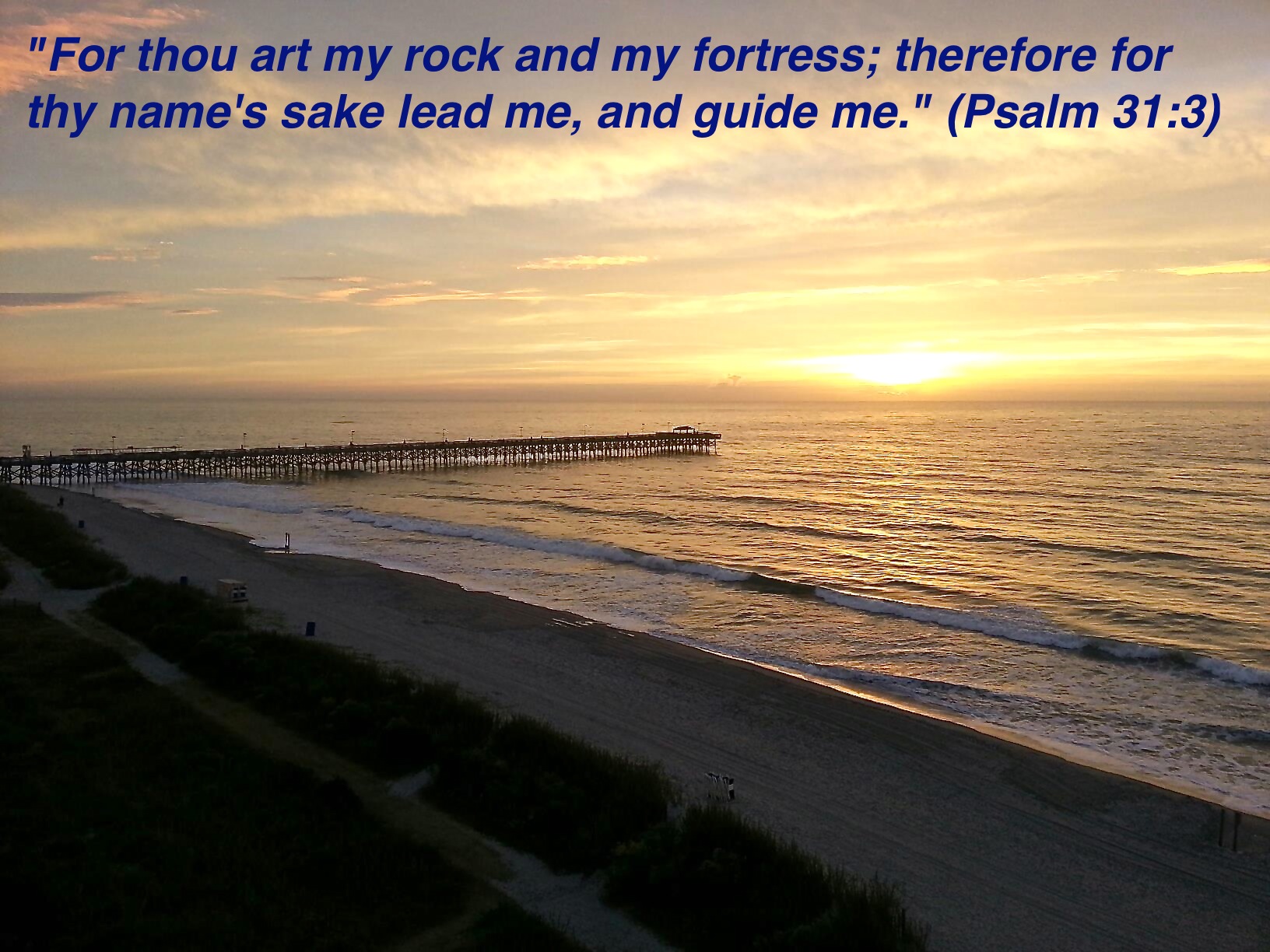
Sunrise-Photo by Jonathan Snow (By Permission)

How we start the day often dictates how the rest of our day will go.  When we start our day with anxiety, worry and fear, these emotions likely will continue to affect us during the rest of the day.  David faced many trials and obstacles; yet he could be encouraged by focusing upon His Lord in the morning.  Starting our day with a focus upon God enables us to walk with confidence, peace, and joy.  Our life will not be dictated by the events of the day, but by our faith and confidence in our living God.

David shares his faith and confidence in God by writing Psalm 31:3:  “For thou art my rock and my fortress; therefore for thy name’s sake lead me, and guide me.” (Psalm 31:3) David  didn’t start his day alone.  He was aware of God’s presence throughout the day.   Here are three truths about God that gave David peace, joy, strength and direction each day

1. “My Rock”-David understands that God brings stability to his life.  We don’t know the future.  There are many dangers and pitfalls that we face each day.  We are tempted to worry.  We feel unable to handle what is happening.  We feel like we are drowning; however, we can find stability in the midst of the instabilities of life.  God is our rock!  He is there to steady us. He is there to enable us to withstand any storm.  Like Peter, when you feel like you are drowning allow the Lord to take your hand and place you on the Solid Rock.

2. “My Fortress”-David understands that God brings security to his life.  Worry, fear and anxiety can control our days because of our insecurity.  We feel insecure about our relationships, our finances, our health, our future, and our reputation.  We can say “goodbye” to these insecurities when we flee to our Fortress, the Living God.  He can protect us from whatever “enemies” or destructive thoughts that may be attacking us.

3. “Lead me and guide me”-David understands that God brings direction to his life.  Each day presents its challenges.  Often, we face situations which confuse us.  We don’t know what to do.  God is our Shepherd.  He desires to lead us each day.  As we start each day, God will guide us as we seek Him in His Word and in prayer.  James shared with his readers: “If any of you lack wisdom, let him ask of God, that giveth to all men liberally and upbraideth not; and it shall be given him” (James 1:5)

“Lord, every day has new challenges, problems and unexpected trials.  Thank you for bringing stability, security and direction in my life.  Help me to begin each day focusing upon you as my Rock, my Fortress and my Guide.  Thank you for taking a special interest in me and what happens in my life throughout each day.  Amen”


Making the Debates Personal

Photo by: The Washington Post

The first two debates are now history.  The debates have been helpful to hear the candidates and learn their positions.  They have also been helpful to see how the candidates interact with each other. Many people have written about the debates, but no one has asked the question:  “What can we learn about ourselves from the debates?”  Here are several questions that we can ask to help us make these debates personal.

1. What is the most important thing in my life? 

The debates, thus far, have focused a lot upon our economy.  The candidates in their own way are saying that money is the most element for being a happy, contented citizen. Is this correct? God says:  “For the love of money is the root of all evil: which while some coveted after, they have erred from the faith, and pierced themselves through with many sorrows.” (1 Timothy 6:10)

When money becomes the main focus in our life, it keeps us from focusing upon God.  Jesus understood this when He said:  “But seek ye first the kingdom of God, and his righteousness; and all these things shall be added unto you.” (Matthew 6:33)
The Lord desires our focus to be upon Him, anything else can quickly become an idol in our life.

2. Do I have a fear of man or a fear of God? 

The candidates use the debates to state their positions to please a certain group of people.  The candidates develop a fear of man because they are looking for votes.  We can often be controlled by the fear of man as well.  The Bible says: “The fear of man bringeth a snare: but whoso putteth his trust in the LORD shall be safe.” (Proverbs 29:25) The fear of man keeps us from pleasing God.  It keeps us from serving God fully.

True freedom is found when we have a fear of God instead of a fear of man.  When we fear God, He is the one that we need to please. “Be not wise in thine own eyes: fear the LORD, and depart from evil.” (Proverbs 3:7) Unlike the politicians, the opinion of others should not enslave our thoughts and actions.  We find true freedom in submission to Our Lord and Savior, Jesus Christ.

3. Do I build people up or do I tear them down?

The debates have illustrated the great art of tearing down another person to build up one self.  We find this to be great entertainment.  We cheer for “our side” to win.  Is it Biblical to tear down another person?  Is this pleasing to God?  Do we have the habit of running over people?  There are many examples in the Bible of people who made it their goal to tear people down.  Ahab hated Elijah.  Saul was out to get David.  Satan wanted to destroy Jesus’ ministry.

Unlike the candidates, we are to seek to build up others.  The word “discourage” has the idea of taking the heart out of a person.  Encouragement means “to put the heart into a person” Barnabas was a biblical character who encouraged others.  He encouraged the early church by his example. He encouraged Paul by befriending him.  He encouraged the church at Antioch by his teaching.  He encouraged John Mark by helping to restore him after his failure.  Love means to encourage others.  We don’t see a lot of love in the debates, but do we see this love and encouragement in our own lives?

4. Am I self-centered or God-centered?

By listening to the debates, you would think that Americans are the most self-centered people in the world.  Our politicians keep trying to pander to what each of us wants.  They appeal to our selfish nature.  I haven’t heard President Kennedy’s quote: “And so, my fellow Americans: ask not what your country can do for you — ask what you can do for your country.

It is easy for a Christian to develop this attitude of self-centeredness in this culture: however Christ has called his disciples to a life of self-denial.  “Then said Jesus unto his disciples, If any man will come after me, let him deny himself, and take up his cross, and follow me.” (Matthew 16:24).  Our lives are to be centered upon Christ.  Our goal is not to follow our desires, but His will. 

5. Am I more concerned about my physical well-being or my spiritual well-being?

One of the greatest issues of the debates and this campaign is the health care crisis in this nation.  Yes, we do have crisis in America concerning our health care. The physical health of Americans in general is quite poor.  However, the greatest crisis is not the physical well-being of Americans, but our spiritual well-being.

How healthy am I spiritually is a question, that we often neglect.  God is very concerned about our spiritual health.  He has given us His Word as food that will nourish our soul.  Here are some questions to help us evaluate our spiritual health:

  • Do I truly desire to walk with God daily?
  • Do I read the Bible with an open heart and mind?
  • Am I quick to obey the commands of Christ?
  • Do I quickly confess my sins to God?
  • Do I love God with all of my heart?
  • Do I love others as God loves me?

There are two more debates in this election cycle.  However, let’s not just look at President   Obama and Governor Romney in these debates, but also we need to think about our own lives and our relationship with God

“Dear Lord, I am thankful that I live in a nation in which I can worship you freely.  I also thank you for the great salvation that I have in your Son, Jesus Christ.  Help me to view this life from your perspective.  Help me to center my life upon you because it is easy to take my focus from you.  While you are working in my life, please guide the leaders of our nation to make wise decisions. Amen”

Moving Beyond Covetousness to Contentment

Woldumar Nature Center (Lansing, Michigan USA) Photo by: Mark J. Booth

Discontentment is found everywhere, including our own hearts.  People are discontent with their marriages, with their jobs, with their health, with their relationships, as well as their possessions.  The root of discontentment is covetousness.  Covetousness is defined as the inordinate desire to have something.  It is also defined as the desire to have something that belongs to another.

Covetousness is a sin that creates a warped view of God.  We feel that God has cheated us out of something.  Satan used this approach with Eve when he told her that God was wrong to withhold the fruit of the tree of the knowledge of good and evil.  Eve coveted the fruit and ate it.  The tenth commandment says: “Thou shalt not covet thy neighbour’s house, thou shalt not covet thy neighbour’s wife, nor his manservant, nor his maidservant, nor his ox, nor his ass, nor any thing that is thy neighbour’s.” (Exodus 20:17)

God’s gives this commandment for two reasons.  First of all, God hates covetousness because it places the coveted object above Him, which is a form of idolatry.  It also causes us to have the wrong view of His person and blessings. “For the wicked boasteth of his heart’s desire,and blesseth the covetous, whom the Lord abhorreth.” (Psalm 10:3)

Secondly, covetousness brings harm to us and to those around us.  The Bible teaches us that covetousness leads to:

  • injustice: “And they covet fields, and take them by violence;and houses, and take them away: so they oppress a man and his house, even a man and his heritage.” (Micah 5:2)
  • harm to ourselves: “But they that will be rich fall into temptation and a snare, and into many foolish and hurtful lusts, which drown men in destruction and perdition.
    (1 Timothy 6:9)
  • departure from the faith: “For the love of money is the root of all evil: which while some coveted after, they have erred from the faith, and pierced themselves through with many sorrows.” (1 Timothy 6:10)
  • many sorrows-See the above verse
  • family problems: “He that is greedy of gain troubleth his own house;”
    (Proverbs 15:27)

Covetousness is clearly a problem many of us face.  The solution to this problem is having a spirit of contentment.  The secret of a growing, joyful Christian life is being content in our relationship with God in spite of the circumstances.  One person defined contentment as: “Realizing that God has provided everything I need for my present happiness.”  How do we go from a spirit of covetousness to a spirit of contentment?

We move beyond covetousness to contentment when:

1. We know that our Heavenly Father will take care of us.  Covetousness says: “I want something beyond what God gives me.”  Contentment says: “My Heavenly Father loves me and He takes care of all of my needs.” “Therefore take no thought, saying, What shall we eat? or, What shall we drink? or, Wherewithal shall we be clothed? 32 (For after all these things do the Gentiles seek:) for your heavenly Father knoweth that ye have need of all these things.” (Matthew 6: 31-32)

2. We know that God is with us even in the most difficult situations we face.  Covetousness looks at others and thinks that they have a better situation than we have.  Contentment doesn’t look at others, but looks to God.  God is with us.  What more do we need?  “Let your conversation be without covetousness; and be content with such things as ye have: for he hath said, I will never leave thee, nor forsake thee.”
(Hebrews 13:5)

3. We focus on our spiritual lives above all else.  A covetous person focuses upon the physical realm.  He doesn’t make his spiritual life a priority.  Jesus reminded His hearers; “But seek ye first the kingdom of God, and his righteousness; and all these things shall be added unto you.” (Matthew 6:33)  A contented person understands that in this life we will have difficulties, but he knows that life is more than this material world.  His desires are focused upon his soul and his relationship with God.

4. We give God all of our burdens.  A covetous person attempts to find security through their own efforts.  They always feel that there is something missing in their life to have total security.  A contented person gives all of their cares and burdens to the Lord.  He is their security. “Casting all your care upon him; for he careth for you.” (1 Peter 5:7)

Our Heavenly Father has blessed us beyond what we will ever know or understand.
“Dear Father, thank you for your many blessings.  Help me to see you in every circumstance in my life.  Help me to trust you to meet all of my needs.  May your presence, love, and provision be the focus of my daily life.  Thank you for adopting me into your family.  Amen.”

Moving Beyond Fear to Courage

Sleepy Hollow State Park, MIchigan- By Mark J. Booth

When fear takes its grip upon our lives, it affects our view of circumstances, of others and of the future.  Fear causes us to doubt the love of God, the presence of God, the provision of God, and even the protection of God.  Fear keeps us from doing what God has called us to do.  How can we move beyond our fears and approach life with courage?

Courage is the willingness to move forward with our lives in spite of the obstacles and dangers that we face.  The nation of Israel, including King Saul, was paralyzed by fear on account of Goliath.  His size was overwhelming.  However, David had moved beyond his fear to courage.  David didn’t see the power of Goliath. He saw the power of His God. His courage has inspired us to face life’s situations with the understanding that God is greater than anything that is happening in our life.

How Can I Move Beyond Fear to Courage?

1. Remember the presence of God.  God is with us as we travel through this life. His presence brings courage because we know that we are not alone.  If we are passing through the shadow of death. we are not alone.  If we are facing some great trial, we are not alone.  If we are facing an unknown future, we are not alone.  “Fear thou not; for I am with thee:be not dismayed; for I am thy God: I will strengthen thee; yea, I will help thee; yea, I will uphold thee with the right hand of my righteousness.” (Isaiah 41:10)

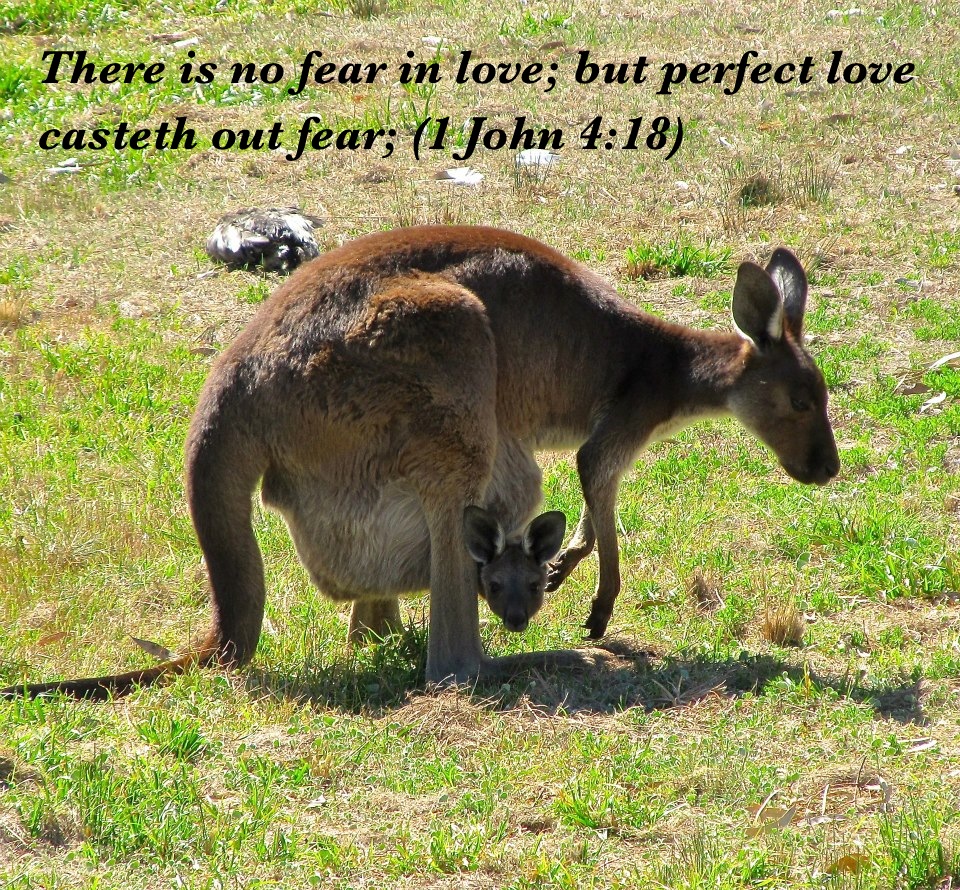
2. Enjoy the love of God.  God’s love was clearly demonstrated upon the cross of Christ.  The fear of death was removed when Jesus died upon the cross for our sins.  His death and resurrection conquered death.  If his love has removed our greatest fear, it can also take away all other fears.  A baby in the arms of its loving mother has no fear.  Likewise, we are in the arms of our loving God.  Why should we be ruled by fear? “There is no fear in love; but perfect love casteth out fear: because fear hath torment. He that feareth is not made perfect in love.” (1 John 4:18) 

3. Develop a fear of God.  The fear of God has been defined as: “Realizing that God is watching and weighing every one of my thoughts, words, actions and attitudes.”  The fear of God places God in His rightful place in our lives.  When our walk with God is right, we can live our life with courage instead of fear. “In the fear of the Lord is strong confidence:and his children shall have a place of refuge.” (Proverbs 14:26)

4. Walk by faith, not by sight.  When walk by faith in our loving, all-wise, and all-powerful God, we can face life with courage.  Fear cannot exist together with faith.  Fear flourishes when we see life from our perspective, instead of trusting our Great God.  When faith rules in our heart, we will have the courage to conquer any mountain that is before us.  “In whom we have boldness and access with confidence by the faith of him (Christ).” (Ephesians 3:12)

5. Study and memorize the Word of God.  Fear often is the result of ignorance.  When we study the Word of God, we see God working in the lives of people such as Moses, Joshua, Ruth, David and Daniel.  These people faced fearful situations; yet they faced them with courage because they knew their God. “But the people that do know their God shall be strong, and do exploits.” (Daniel 11:32)  When we study the Word, we get to know God better.  The more we know Him, the more we will be able to trust Him.  Our fear will turn into courage, not because of who we are, but because of who He is.

6. Become familiar with the “fear nots” in the Bible. God knows our heart.  He knows that we are prone to fear.  We are prone to walk by sight and not by faith.  He encourages us with many of His “fear nots” in the Bible.  Here are just a few.

  • Fear not in your life’s journey. “And the Lord appeared unto him the same night, and said, I am the God of Abraham thy father: fear not, for I am with thee,” Genesis 26:24
  • Fear not concerning your daily needs. “And Elijah said unto her, Fear not; go and do as thou hast said: but make me thereof a little cake first, and bring it unto me, and after make for thee and for thy son. For thus saith the Lord God of Israel, The barrel of meal shall not waste, neither shall the cruse of oil fail, until the day that the Lord sendeth rain upon the earth.” (1 Kings 17:13-14)
  • Fear not when in danger. “And he answered, Fear not: for they that be with us are more than they that be with them. And Elisha prayed, and said, Lord, I pray thee, open his eyes, that he may see. And the Lord opened the eyes of the young man; and he saw: and, behold, the mountain was full of horses and chariots of fire round about Elisha.”  (2 Kings 6:16)
  • Fear not in times of weakness. “Fear thou not; for I am with thee: be not dismayed; for I am thy God: I will strengthen thee;” (Isaiah 41:10)
  • Fear not in times of trials. “Fear not: for I have redeemed thee,I have called thee by thy name; thou art mine. When thou passest through the waters, I will be with thee;and through the rivers, they shall not overflow thee: when thou walkest through the fire, thou shalt not be burned;” (Isaiah 43:1-2)
  • Fear not in times of failure.  Here is what God said after the Israelites’ failure at Ai. “And the Lord said unto Joshua, Fear not, neither be thou dismayed:” (Joshua 8:1)  God did bring the victory after their previous failure.  
  • Fear not in times of sickness or nearing death. “Yea, though I walk through the valley of the shadow of death, I will fear no evil: for thou art with me; thy rod and thy staff they comfort me.” (Psalm 23:4)

“Dear Lord, thank you for assuring me that you are with me throughout this life and for all eternity.  Thank you that you give me the courage to move forward in my life in spite of the obstacles that are before me.  Please, give me the courage to live each day for you. ”

Author’s Note: This is the second article in the series called “Moving Beyond!”

Where Can I Go?(Psalm 18:2)


Photo of the Alps by Mark J. Booth

I am drowning in the midst of a storm.  I feel alone.  I don’t know where to go?  What does the Word of God say: “The Lord is MY ROCK, and MY FORTRESS, and MY DELIVERER; MY GOD, MY STRENGTH, in whom I will trust; MY BUCKLER (shield), and the HORN OF MY SALVATION, and MY HIGH TOWER.” (Psalm 18:2)

Jesus reminded the disciples that in this life they would experience tribulation.  We have all experienced tribulation.  We try to resolve the situation.  We try to cope.  We try to ignore the storm; yet we feel like we are sinking deeper and deeper into the raging waters.  David experienced many storms in his life.  Where did he go for deliverance and relief?  He went to “his God”.  Likewise, we can go to our God regardless of how strong the storm.

1. We can go to Our God because He is our Rock.  When a person is sinking into the water, they are looking for something solid on which to find their footing.  We often stumble and fall because we don’t stand firmly upon our solid rock, the Lord God.  Do you feel like you are wavering in every direction, then go to the Rock.  

2. We can go to Our God because He is Our Fortress.  A fortress is a place of refuge from the enemies we may have in this life.  Many people talk about being hurt by others.  Yes, others may try to hurt us, but we have a fortress to whom we can run.  We don’t have to be hurt by others, we can go to the Lord God, Our Fortress.

3. We can go to Our God because He is Our Deliverer.  The disciples were fearful in the midst of a terrible storm.   They were without hope until they cried out to the Lord.  The Lord stopped the storm.  No matter how awful the storm, the Lord is ready and able to deliver us.  No matter how strong the temptation the Lord will deliver us.

4. We can go to Our God because He is Our God.  David knows that he has a personal relationship with the Lord God.  He can go to His God at any time.  When we know God, we can trust Him.  We know that He loves us with an everlasting love.  We know that He will never leave us nor forsake us.

5. We can go to Our God because He is Our Strength.  David couldn’t handle his enemies in his own strength, but he knew the All-Powerful God.  We can do nothing apart from God.  As Paul stated: “I can do all things through Christ which strengtheneth me.” (Philippians 4:13).  We may get tired and want to quit, but God’s strength enables us to carry on.

6. We Can Go to Our God because He is our Shield.  Satan throws his fiery darts of doubt, denial, guilt, temptation, discouragement, and rebellion against God.  In ourselves, we have no defense against these darts; however God is Our Shield.  He comes between us and the fiery darts of Satan.  There is no safer place than behind God, Our Shield.

7. We can Go to Our God because He is Our Savior.  Our salvation solves the greatest problem in life, which is how can a sinful person approach a Holy God.  Jesus took our place upon the cross and paid for our sin.  Through Him, we have eternal life.  If God has taken care of our greatest problem in this life, why can’t we trust Him with the storms that pass through our lives?

8. We can Go to Our God because He is Our High Tower.  We often see a bird flee into the sky as we approach it.  The bird knows that there is safety in the heights.  Likewise, our Lord places us in the heights to keep us away from the traps and snares of this life.  The storms have little effect upon us when we are safe and secure in the Lord.

As a result of all that God is, David says: “In whom I will trust.”  David knows the Greatness of God.  He trusts God because he knows Him.  Do we know our Great God.  Yes, the storm may be strong, but we do have One to whom we can go.  Will we?